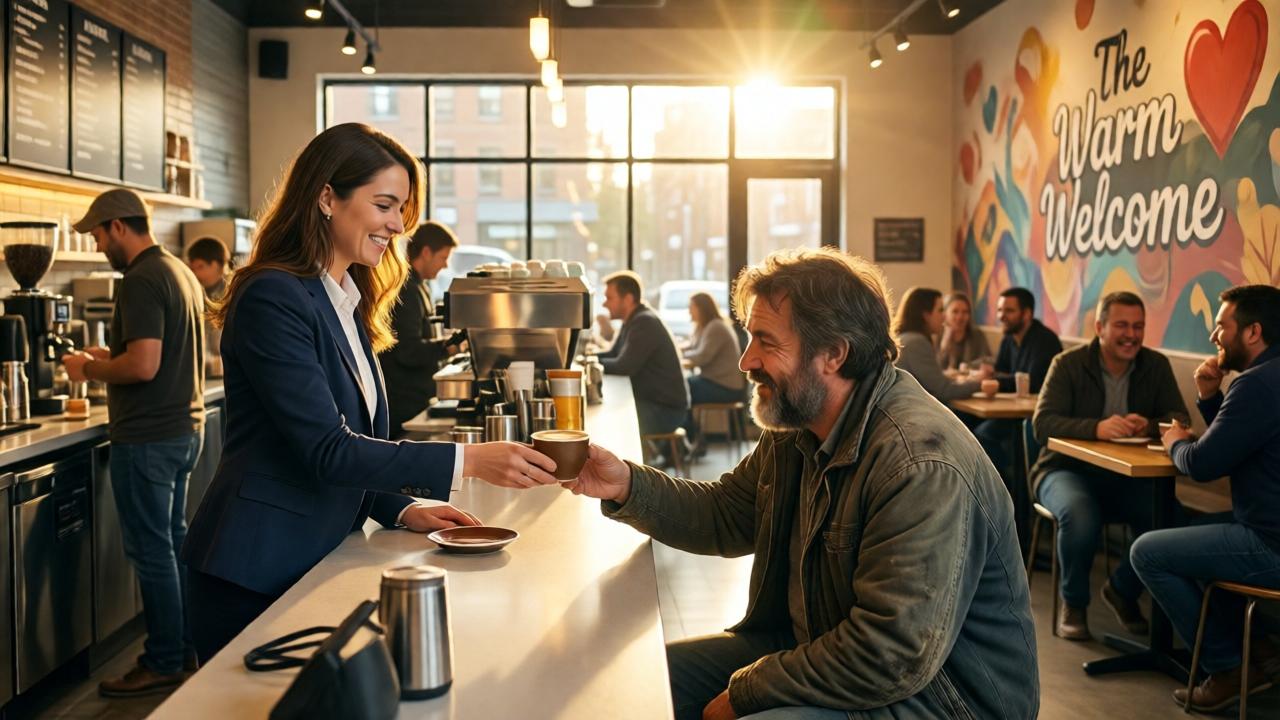

I’m Daniel Morrison, 49, and I’ve spent the last two decades building a restaurant empire worth $420 million. But on that cold morning, none of that mattered. I stood in the doorway of one of my own coffee shops—a chain I own 35% of, with 200 stores across eight states—wearing a torn army jacket, ripped jeans, and boots with holes. My beard was long and unkempt, my hair greasy, my skin stained with dirt. I looked exactly like what the world calls ‘homeless trash.’ And I was about to learn just how far my company had strayed from the values I wrote myself: dignity, compassion, humanity.
The manager, a sharp-faced woman in her forties, spotted me the second I stepped inside. Her eyes narrowed, and she marched over like a general confronting an enemy. ‘Can I please have a cup of water? I’m really thirsty,’ I said, my voice hoarse from the cold. She sneered, ‘We don’t serve your kind here. Leave right now! Look at you! Dirt! Filth! You’re scaring off my paying customers!’ I tried to explain—just a cup of water, that’s all—but she grabbed a cup of hot coffee and dumped it over my shoulder. The burning liquid soaked through my jacket as she screamed, ‘Get out before I call the cops on you homeless trash!’
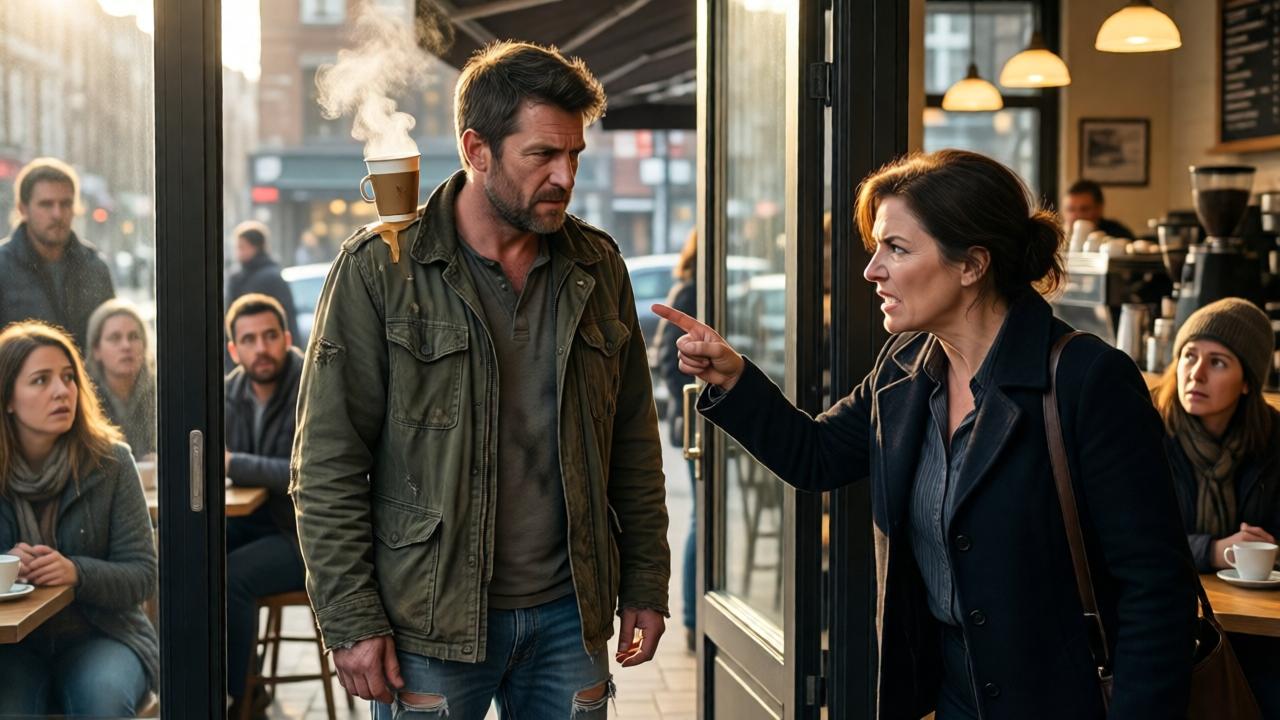
Customers gasped, but no one moved to help. Phones lifted instantly, recording the scene. Someone laughed. One woman said, ‘Finally, someone doing something about these people.’ Another added, ‘He probably just wants drug money.’ The words cut deeper than the burn on my shoulder. This was my company. My legacy. And it had become a place where people felt justified in dehumanizing a stranger based on his appearance. I kept my head down, waiting, because I knew the real test was just beginning.
Then I saw her: Sophie, a young barista, maybe 22, with kind eyes and a trembling voice. She rushed over with napkins, ignoring the manager’s glare. ‘Sir, I’m so sorry. Are you okay? That coffee was really hot.’ The manager snapped, ‘Sophie, get back to work.’ But Sophie didn’t flinch. She gently wiped my jacket, then reached into her apron and pulled out a crumpled $20 bill. ‘Please take this. Buy something warm.’ The manager went purple. ‘You’re fired. Get out.’ Sophie just said, ‘That’s fine. I can’t work for someone who treats people like this.’
I didn’t say a word. I slowly reached into my jacket, pulled out my leather wallet, and handed Sophie a single business card. She read what was printed on it, and her expression changed—first confusion, then shock, then a slow, disbelieving smile. The card read: ‘Daniel Morrison, CEO & Founder, Morrison Hospitality Group.’ The manager’s face went pale as she snatched the card from Sophie’s hand. Her mouth opened and closed like a fish gasping for air. ‘You… you own this company?’ she stammered. I nodded. ‘In less than 15 minutes, you begged me for forgiveness. But I’m not here for apologies. I’m here to make a change.’
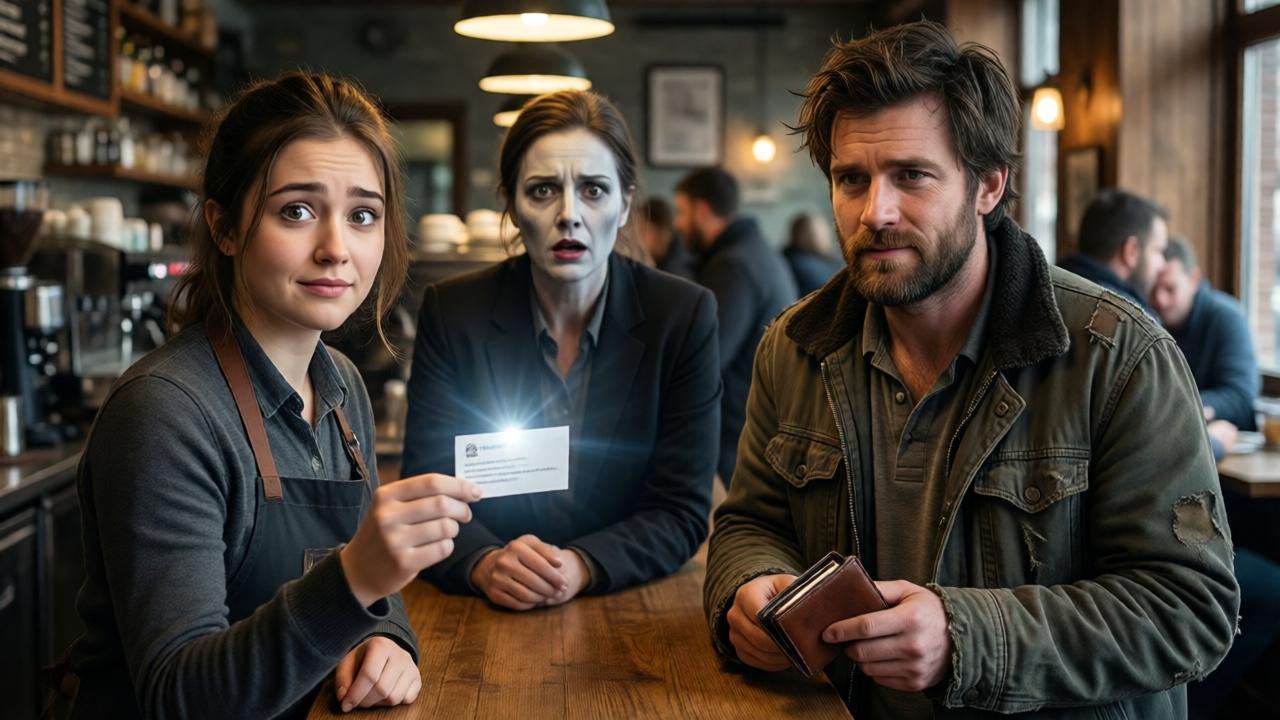
The manager started babbling. ‘Please, Mr. Morrison, I didn’t know. I’m so sorry. I have a family. I need this job.’ Her voice cracked, and tears streamed down her face. But I remembered how she had screamed at me, how she had poured coffee on a man she thought was worthless. I turned to Sophie. ‘You’re not fired. You’re promoted. I’m making you the regional manager for all 200 stores.’ Sophie’s eyes welled up. ‘I don’t know what to say.’ I smiled. ‘Say you’ll help me rewrite the training manual. We’re going to teach every employee that dignity isn’t a privilege—it’s a right.’
Sophie didn’t just accept the promotion; she threw herself into the work. Within a month, she had designed a new customer service program called ‘The Warm Welcome,’ which required every employee to treat all customers—regardless of appearance—with respect and kindness. She also started a partnership with local shelters, offering free coffee and meals to the homeless every morning. The manager, after a formal review, was terminated. But Sophie insisted on offering her a severance package and a referral to a counseling program. ‘Everyone deserves a second chance,’ Sophie said. ‘Even the people who hurt us.’
- Sophie’s program increased customer satisfaction scores by 40% in the first quarter.
- The chain donated over 50,000 cups of coffee to homeless shelters in the first year.
- Employee turnover dropped by 60% as staff felt proud to work for a company with values.
- Sophie was featured in a national magazine as a ‘Leader of Compassion.’
That day changed everything for me. I had spent years building a business, but I had forgotten to build a culture. Sophie reminded me that the heart of any company isn’t the profits—it’s the people. I now spend one day every month in disguise, visiting my own stores. Sometimes I’m a homeless man, sometimes a tired mother, sometimes an elderly veteran. And every time, I’m looking for the next Sophie. Because she’s out there, waiting for someone to see her worth.