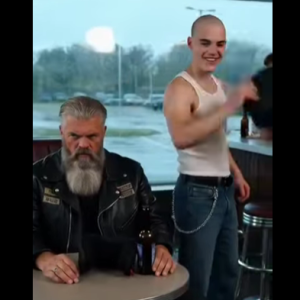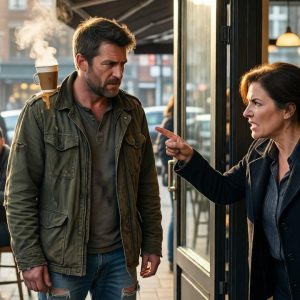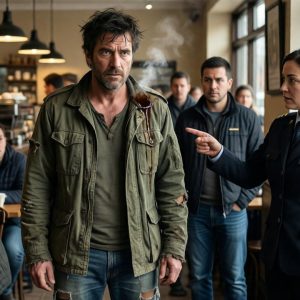

“You’re just crew, get off my stage!” Gregory’s voice sliced through the backstage air, loud enough for the whole cast to hear. Leon didn’t argue. He simply turned, his worn leather jacket catching the harsh stage light for one final, defiant second before he melted into the dark wings. He didn’t know that in twenty minutes, Gregory would desperately wish he could take those words back. The Meridian Theater in Chicago was three hours from its most important opening night in a decade, and the air backstage was thick with the scent of sawdust and nervous sweat.
Leon had worked these wings for over twenty years. His hands were a map of callouses from rope and cable, and his left boot was worn through at the heel. That evening, his experienced eye had caught a problem—a hairline fracture in the secondary lock mechanism on the main drop, a 400-pound beast of wood and canvas suspended sixty feet above the stage. He tried to tell Gregory, the frantic director. Gregory cut him off in front of the entire company, pointing toward the back room like a man shooing away a stray cat. Sophie, a nineteen-year-old intern in her first semester, witnessed it all, her hands still shaking from the general tension.
Feeling a pang of injustice, Sophie slipped out after Leon. She found him in the stark, concrete back corridor lined with old props. “I’m sorry,” she whispered, her voice unsteady. “For Gregory. For all of it.” Nobody had asked her to apologize. Leon shook his head gently, not in dismissal, but in a kind of weary acceptance. Then he fixed his gaze on her, his eyes serious in the dim light. “Always check the overhead rigging,” he said quietly, “before you ever stand under it.” She didn’t fully understand the weight of his advice, but she nodded anyway, storing the words away.
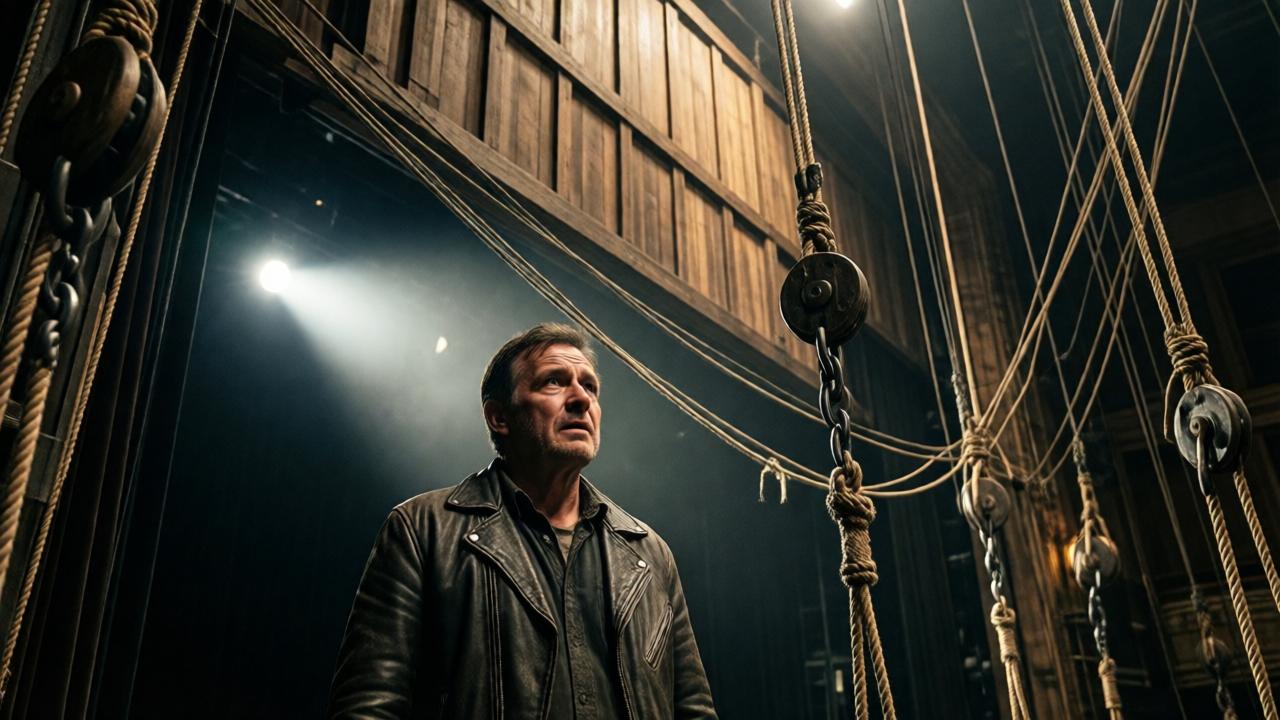
Leon didn’t go to the break room to sulk. Instead, he circled back to the fly system, alone in the darkness. By the faint glow of emergency lights, he rechecked every cable, every pulley, every connection by hand. No one asked him to. No one even knew he was there. It was a silent ritual of responsibility, performed for the love of the theater itself, not for the applause or the director’s praise. Meanwhile, the clock ticked relentlessly toward curtain.
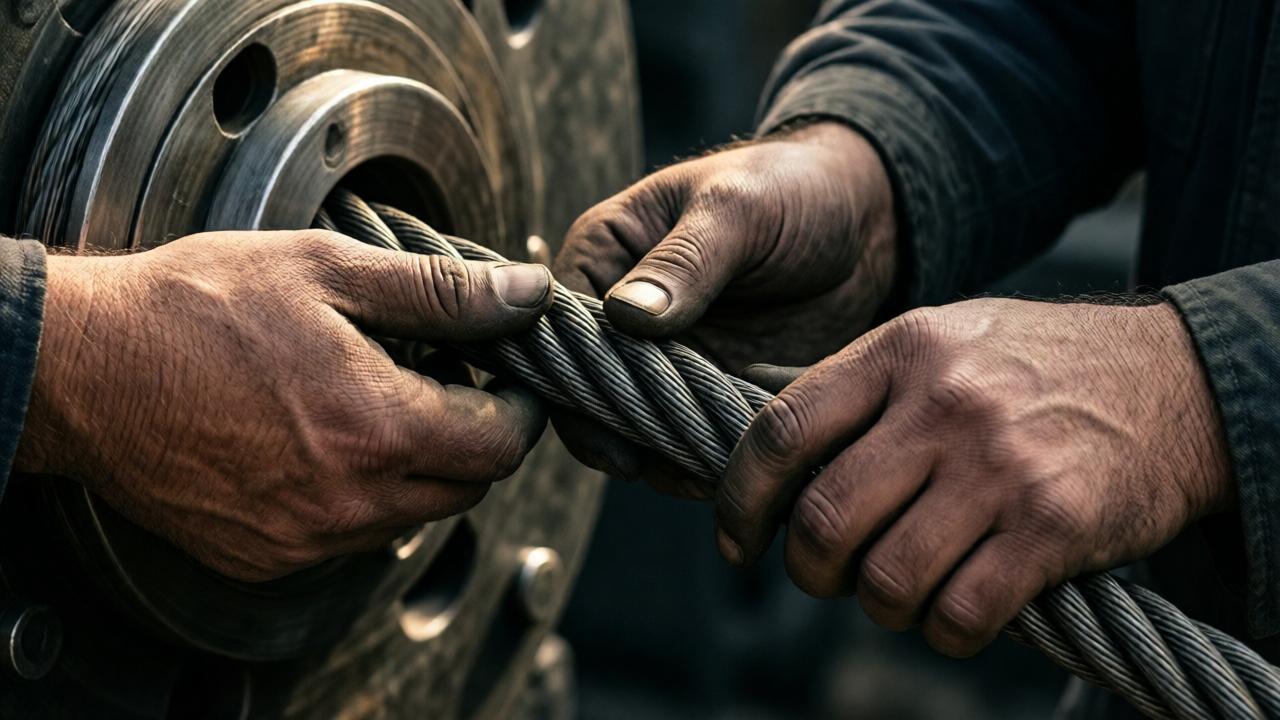
Twenty minutes before the curtain was set to rise, the inevitable happened. With a sharp, metallic *crack* that echoed like a gunshot in the cavernous space, the compromised secondary lock gave out. The entire rigging shuddered violently. For a heart-stopping second, the massive backdrop tilted, groaned, and then began its deadly descent, straight toward the cluster of actors and crew gathered below for a final pep talk from Gregory. A collective scream tore through the air.
But the drop never reached the stage. From the shadows high above, a figure moved with impossible speed. Leon, having anticipated the exact failure point, had already positioned himself at the primary winch. His muscles, forged by decades of this work, strained against the sudden, immense weight. “Hold the brake line!” he roared, his voice cutting through the panic. Sophie, remembering his words, was the first to react, throwing her weight onto a secondary rope. Others followed, a chain of desperate humanity pulling against gravity itself.
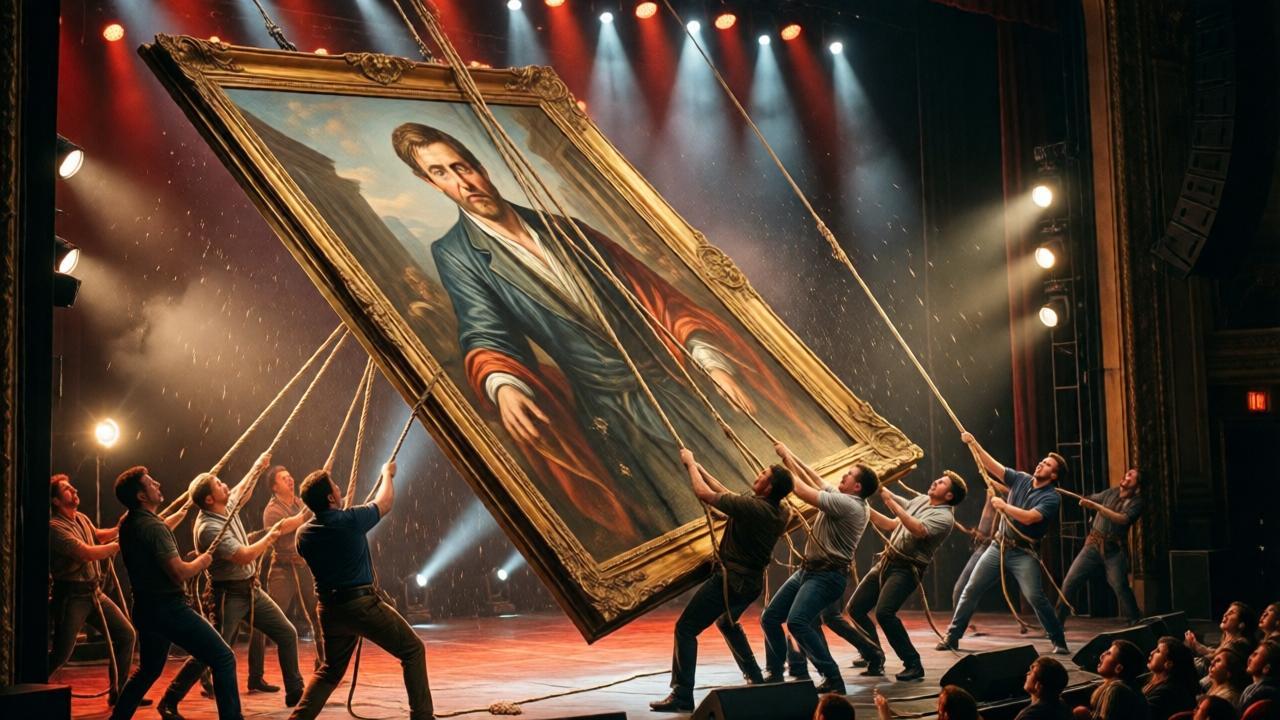
The backdrop jerked to a halt, swaying precariously just ten feet above the floor. In the stunned silence that followed, all eyes turned from the suspended disaster to Gregory, who stood pale and speechless. Then, they looked up to the fly gallery, where Leon leaned heavily against the winch, breathing hard. He didn’t look for thanks. He simply gave a single, firm nod. It was a quiet testament that the show—and more importantly, the people—were safe. The real performance had already happened, unseen by the waiting audience, and it had been a masterpiece of quiet duty.