

Stories

Silence After Laughter: The Story of Samuel, Who Asked Only for Kindness

Silence After Laughter: The Story of Samuel

In the farthest corner of the classroom always sat a quiet boy. His name was Samuel. He wore a loose grey hoodie, the hood almost always pulled over his forehead. He never raised his hand and spoke only when called to the blackboard. His gaze was constantly fixed on his textbook or the floor.

At home, in a small two-room apartment, his parents—Maria and Igor—awaited him. They created an island of calm for him. In the evenings, his mother cooked his favorite chicken soup, and his father quietly read the newspaper in his armchair. They knew about his illness, about the chemotherapy that drained his strength. They saw how he was losing his hair under the hood, and how each school day left a new weariness on his face.
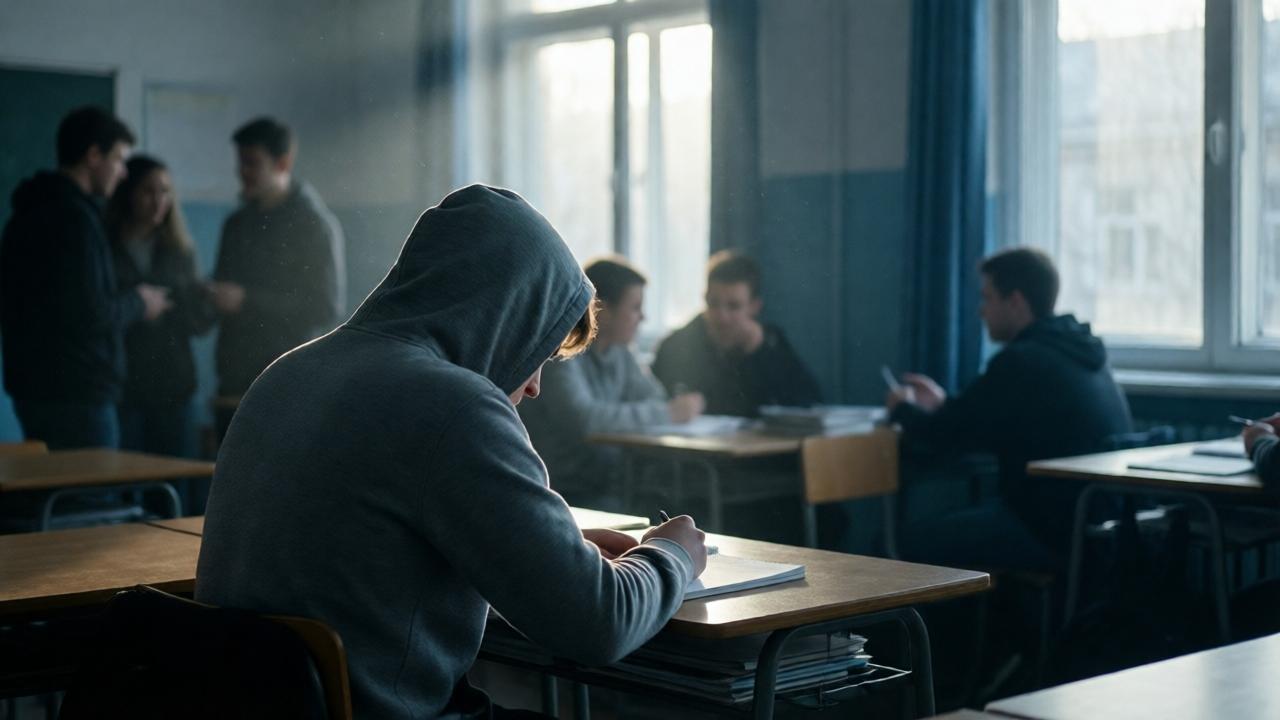
A quiet, dimly lit classroom from the perspective of the back row. A teenage boy with a grey hoodie pulled up sits alone at a desk, his head bowed over a notebook. Morning light slants through dusty windows, illuminating floating dust particles. The rest of the classroom is slightly out of focus, with other students chatting in groups. The mood is isolating and melancholic, with cool tones dominating. Cinematic, shallow depth of field, realistic style.

One day during a long break, everything changed. A girl from the next row, deciding to play a prank, suddenly yanked his hood. The fabric slipped off. Silence fell over the classroom, followed by gasps and whispers. Samuel’s head was covered with scars and bald patches—marks of his difficult treatment.

“What’s wrong with your head?” someone from the front row laughed loudly. “Ew, he looks sick!” another voice added. Someone pulled out a phone. The shutter click sounded like a gunshot. “This is going in the group chat!” a guy said, smirking. Samuel just clenched his fists under the desk. His eyes filled with tears, but he didn’t make a sound. He silently gathered his backpack and left the classroom, with laughter following him down the hallway.
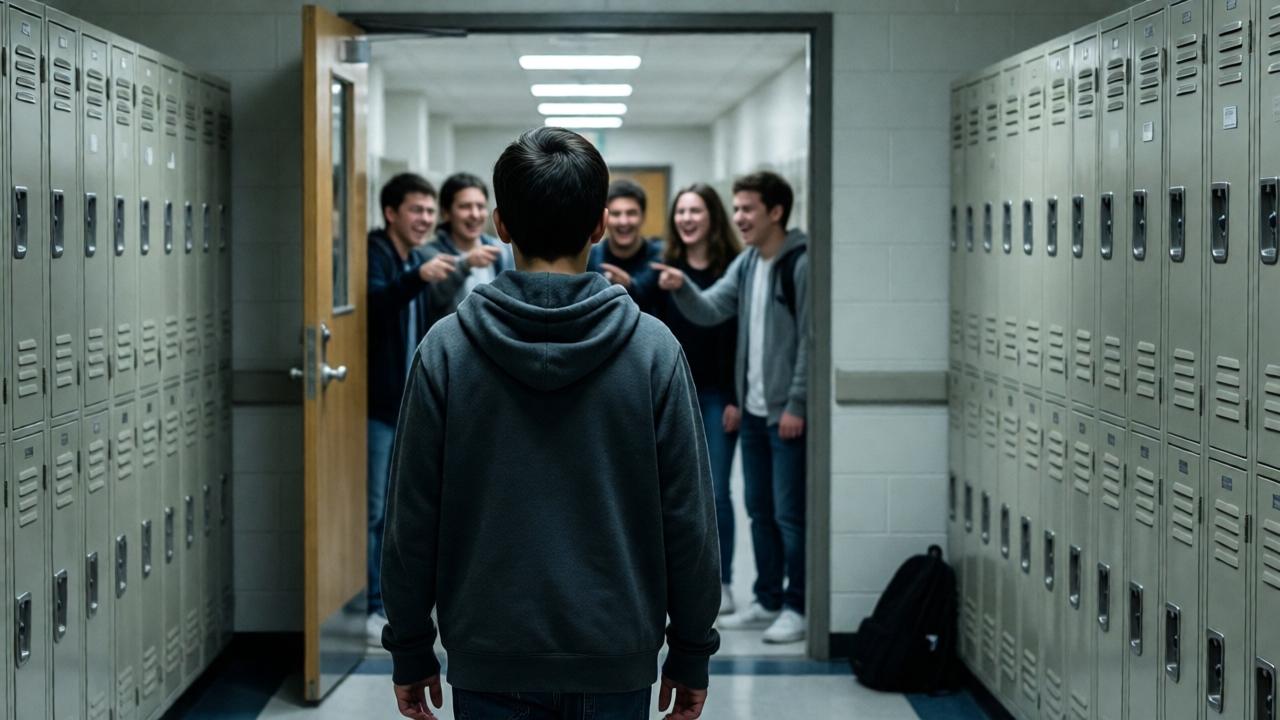
A dramatic, emotionally charged scene in a school hallway. A boy with a hoodie is walking away, his back to the viewer, shoulders slumped. Behind him, through an open classroom door, a group of teenagers are laughing and pointing, their faces blurred but expressions mocking. The hallway is long and sterile with lockers. Lighting is harsh fluorescent, creating sharp shadows. The focus is on the lonely figure walking away. Photorealistic, high contrast, evocative of a poignant film still.

The next day, his seat was empty. And the day after that. By the fourth day, the jokes had died down, replaced by an awkward silence. “Where’s that weird quiet kid?” someone asked during class, now without malice. There was no answer. The teacher finally sighed heavily and said firmly, “He’s not coming back.” The classroom fell utterly quiet.

After school, a few classmates, driven by a vague sense of guilt, went to his house. The gate was open. Black mourning ribbons hung on the door. In the living room, in the semi-darkness, sat his mother. She was holding a frame with a photo of a smiling Samuel—the way he was before the illness. Her eyes were empty and swollen from tears.
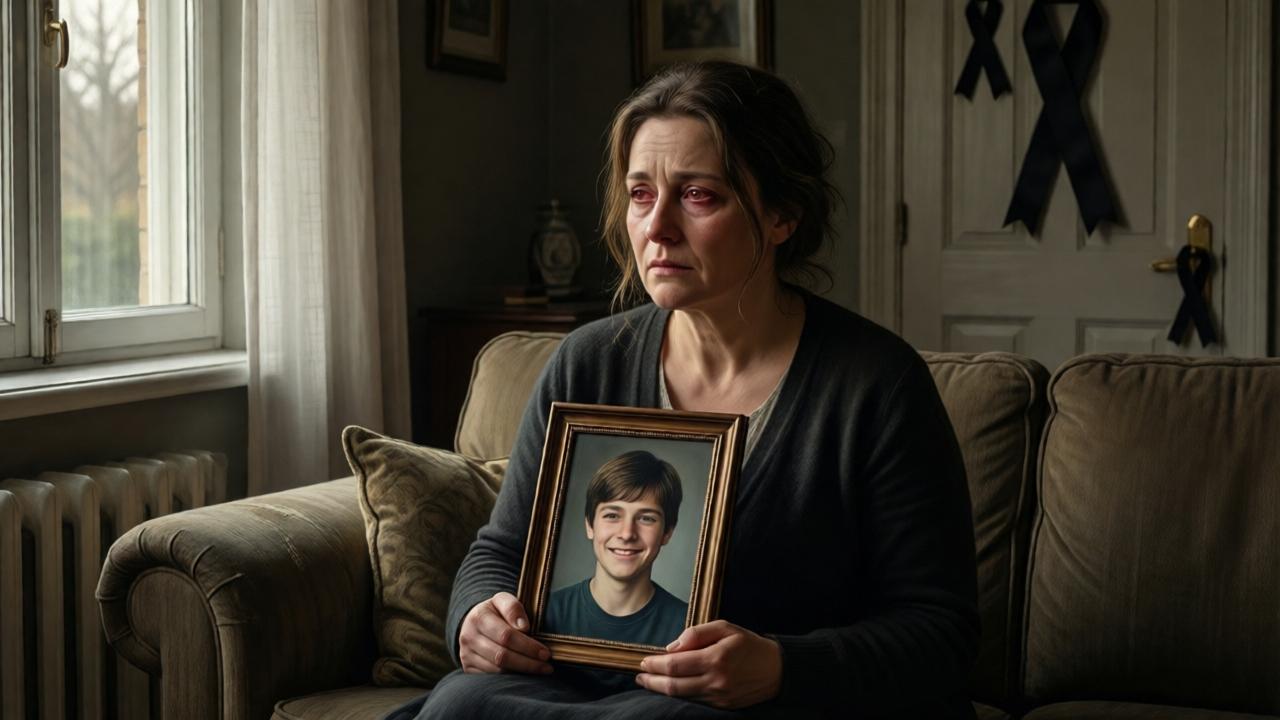
An intimate, sorrowful interior scene. A mother in her 40s sits on a sofa in a modest living room, holding a framed photo of her smiling teenage son. She looks exhausted, with red-rimmed eyes, staring into the distance. Soft, sad afternoon light filters through a window with a sheer curtain. In the background, a door is visible with black mourning ribbons. The atmosphere is heavy with grief and silence. Rembrandt-like lighting, oil painting style, deeply emotional and realistic.

“We came… to visit Samuel,” one of the girls whispered. The mother’s voice trembled as she spoke. She wiped away a tear and looked at them. “He couldn’t bear the bullying and the mockery,” she said quietly. “Every day he came home broken. He was already fighting cancer, and school was the only place where he hoped to feel normal. But that pain became too much.”

The kids stood there, not knowing where to look. “He needed so little,” the mother continued, looking at the photo. “Just kindness. One friend. One person who would treat him like a human being.” They left with hearts of stone, all sharing the same bitter wish—that they could turn back time and simply be kinder.

A symbolic, hopeful image. A single, delicate dandelion clock with its seeds almost ready to take flight, held gently in a young person's hand against a soft-focus background of a schoolyard. The seeds are illuminated by warm, golden sunset light, representing fragility and the spreading of a message. The mood is bittersweet and reflective. Shallow depth of field, ethereal lighting, photorealistic with a touch of magical realism.

This story is a harsh lesson not only for children but also for parents. “Talk to your children about more than just grades,” says a psychologist commenting on this case. “Ask them how things are in their class, if there’s someone being bullied, someone who feels lonely. Teach them not to be bystanders, but to be defenders. Explain that their kindness could be someone’s lifeline. You never know what another person is going through. Be kind. Always.”


Related Posts

Surpise or a brawl at the Diner

Rain hammered the windows of Miller’s Diner, turning the neon signs outside into blurry rivers of red and blue. Inside, the place looked frozen in another decade: cracked…

The Coffee Shop Test: A Millionaire’s Lesson in Dignity

I’m Daniel Morrison, 49, and I’ve spent the last two decades building a restaurant empire worth $420 million. But on that cold morning, none of that mattered. I…

The Coffee That Changed Everything: How a $420 Million Consultant Learned His Most Valuable Lesson

The morning air bit through my torn army jacket like a warning. I stood outside the coffee shop I’d helped design, watching steam rise from a manhole cover,…

When Faith Sparks the Impossible: The Mechanic Who Prayed and the Generator That Roared

The workshop air was thick with grease, diesel fumes, and the sting of mockery. An old mechanic, wiping his hands on a rag, sneered at the quiet apprentice…

The Note That Changed Everything: A Story of Kindness and Redemption

Two hungry sisters entered a small cafe, their clothes worn and faces pale from days of little food. Emma, the elder, clutched her younger sister Lily’s hand tightly….

From Junk to Fortune: How a Classic Car Lesson Changed Everything

The night air was thick with the scent of grilled burgers and cheap perfume as Dylan stepped out of his beat-up Camaro Z28 at his girlfriend Luna’s birthday…