

The fluorescent lights of the grocery store hummed overhead, casting a sterile glow on rows of perfect produce. In the quiet aisle, Maria stood frozen, her wrinkled hands clutching a few crumpled bills. The math was simple and cruel: the money in her palm was not enough for the carton of eggs. Going home empty-handed felt like a physical impossibility. Her two young grandchildren, whom she had cared for since their parents’ tragic passing, hadn’t eaten a proper meal in two days. The silence in their small apartment had become a heavy, hungry thing.
Desperation, a sharp and unfamiliar feeling, tightened its grip. With a furtive glance, Maria slipped a few eggs into the deep pockets of her worn jacket. Her heart hammered against her ribs as she approached the exit, each step feeling like a betrayal of the honest life she had always lived. She was trembling, a silent prayer on her lips. Then, fate intervened with a sickening crack. One egg tumbled from her pocket, splattering yellow on the clean linoleum floor. The young cashier’s eyes snapped to the mess, then to Maria’s pale, terrified face.

“Please,” Maria whispered, her voice breaking as she extended her meager cash. “Take this. It’s for the children. They’re so hungry.” The cashier, a man in his twenties, shook his head, his expression hardening. “Doesn’t matter, everyone says that when they get caught — it’s called stealing,” he stated flatly, reaching for the store phone. The arrival of Officer Ben Carter, with his uniform and serious demeanor, seemed to seal Maria’s fate. As he listened to her tearful plea, her story of loss and responsibility spilling out, she braced for the worst. True to procedure, he gently placed her in handcuffs and guided her to the back of his patrol car. “Stay here and don’t think of running away,” he instructed, his tone firm. “I need to get something.”
Maria sat in the cold silence of the car, shame and fear washing over her in waves. She thought of the children waiting at home. Minutes ticked by, each one an eternity. Then, the car door opened. Instead of driving her to the station, Officer Carter returned, but he wasn’t alone. He carried two heavy bags of groceries. Gently, he placed them on the seat beside her, the contents clear: cartons of eggs, bread, milk, fruit, and cans of soup. “For your family,” he said simply, his earlier sternness replaced by a quiet resolve. He removed the handcuffs. A stranger, moved by the scene, had recorded the entire exchange on their phone.
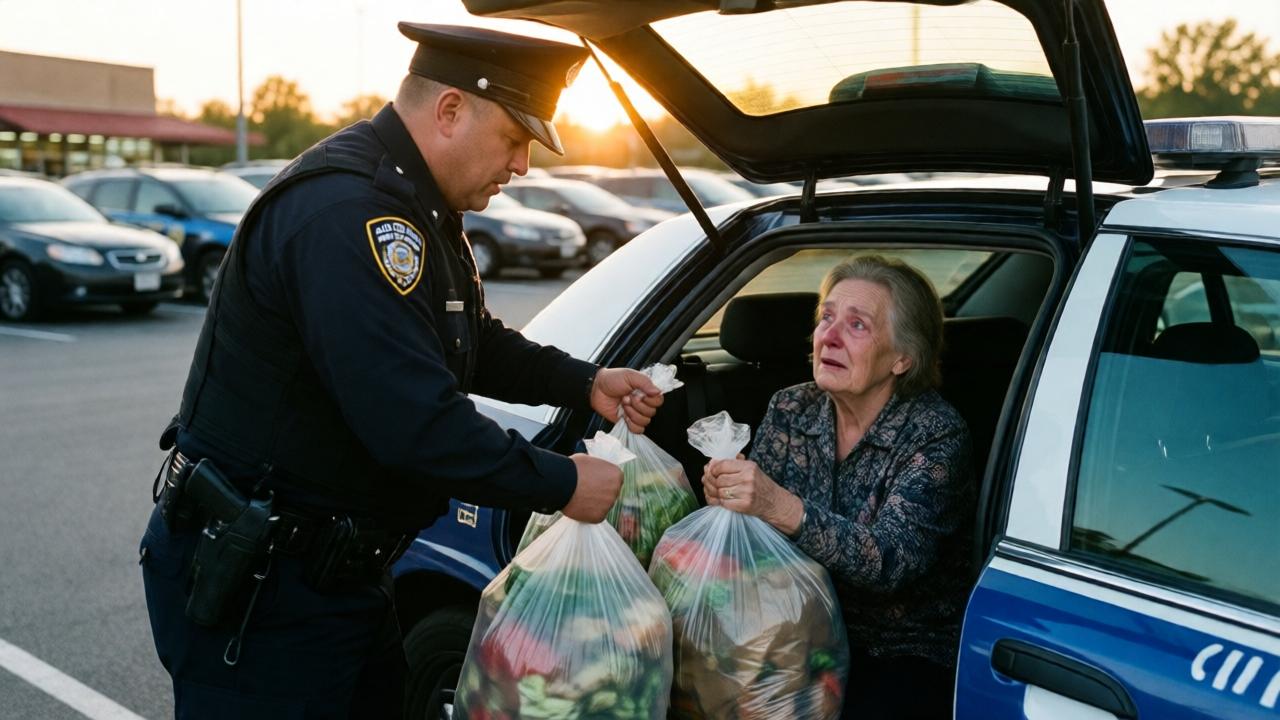
The video, titled “The Cop Who Bought the Groceries,” spread like wildfire. Overnight, it garnered millions of views, with comments flooding in praising Officer Carter’s compassion. But what happened next shocked everyone. The story didn’t end with viral fame. A local news station tracked down Maria and her grandchildren. Their segment revealed the full depth of her struggle: living on a tiny fixed income, navigating grief, and fighting to keep a family together. The community’s response was immediate and overwhelming.
A fund was established by a local church, and donations poured in from across the country, quickly surpassing any expectation. The grocery store chain, facing public pressure, issued a formal apology to Maria, offered her a job with flexible hours, and set up a permanent donation bin for families in need. Officer Carter, now a local hero, used the platform to advocate for a new community outreach program connecting officers with social services to address the root causes of such desperation. “That day wasn’t about ignoring the law,” he told reporters. “It was about seeing the person behind the action. My job is to protect and serve, and sometimes service means offering a hand up, not just a handcuff.”
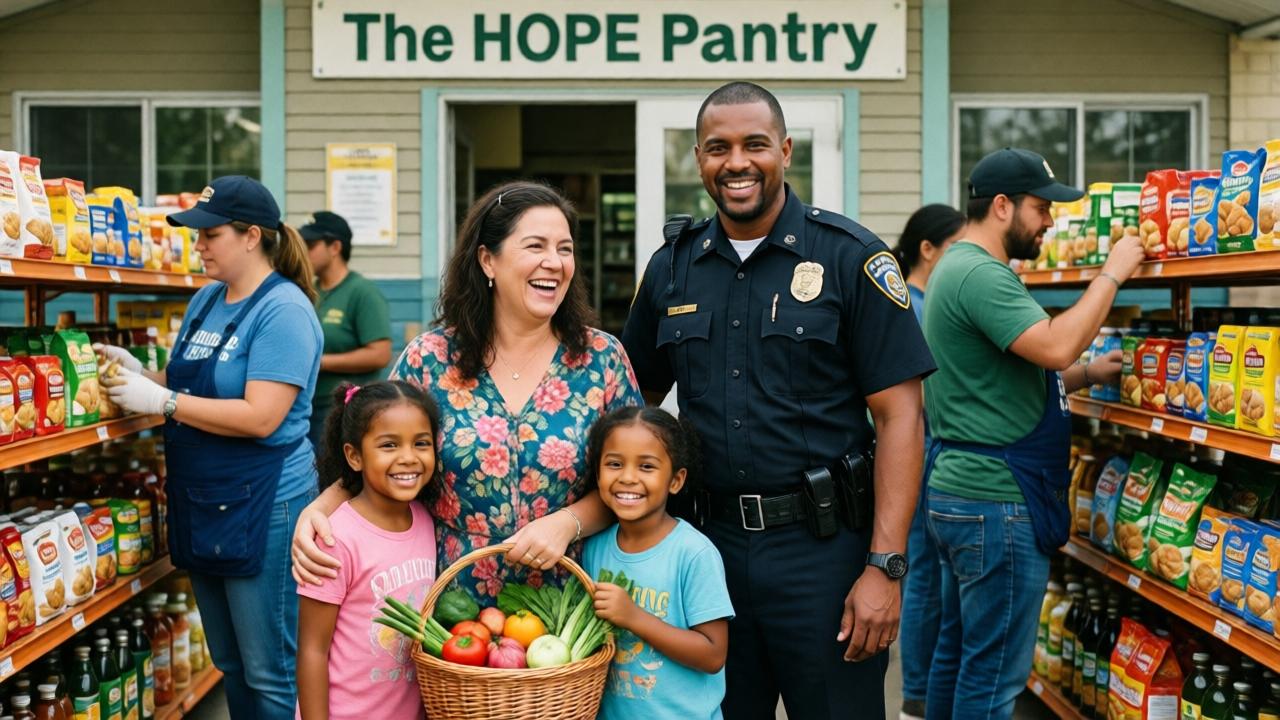
Today, Maria’s pantry is full, her grandchildren are thriving in school, and she works part-time at the very store where her world almost collapsed. The cracked egg on the floor became a symbol, not of a crime, but of a breaking point that led to a breakthrough in community empathy. It reminded everyone that behind every act of desperation, there is a story waiting to be heard, and that sometimes, the most profound justice is served with kindness, not a citation.