
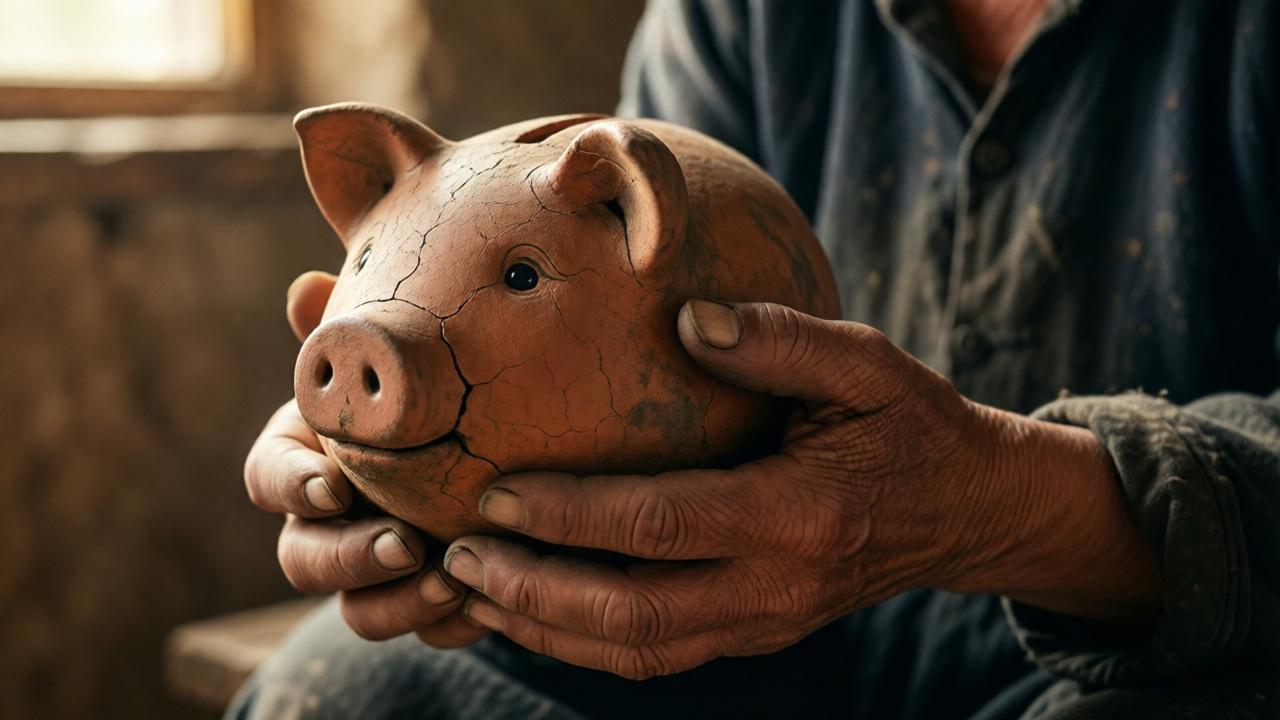
The day began with an innocence that would soon shatter. “Grandma, I need an iPhone for online classes,” the boy said with feigned urgency. The old woman, whose hands were marked by decades of hard work on the farm, sensed no evil. She opened her piggy bank, which contained the savings of a lifetime – every cent earned through hard work. “For your education, my boy,” she whispered as she pressed the money into his hand. In her eyes lay boundless trust, a love that asked no questions.
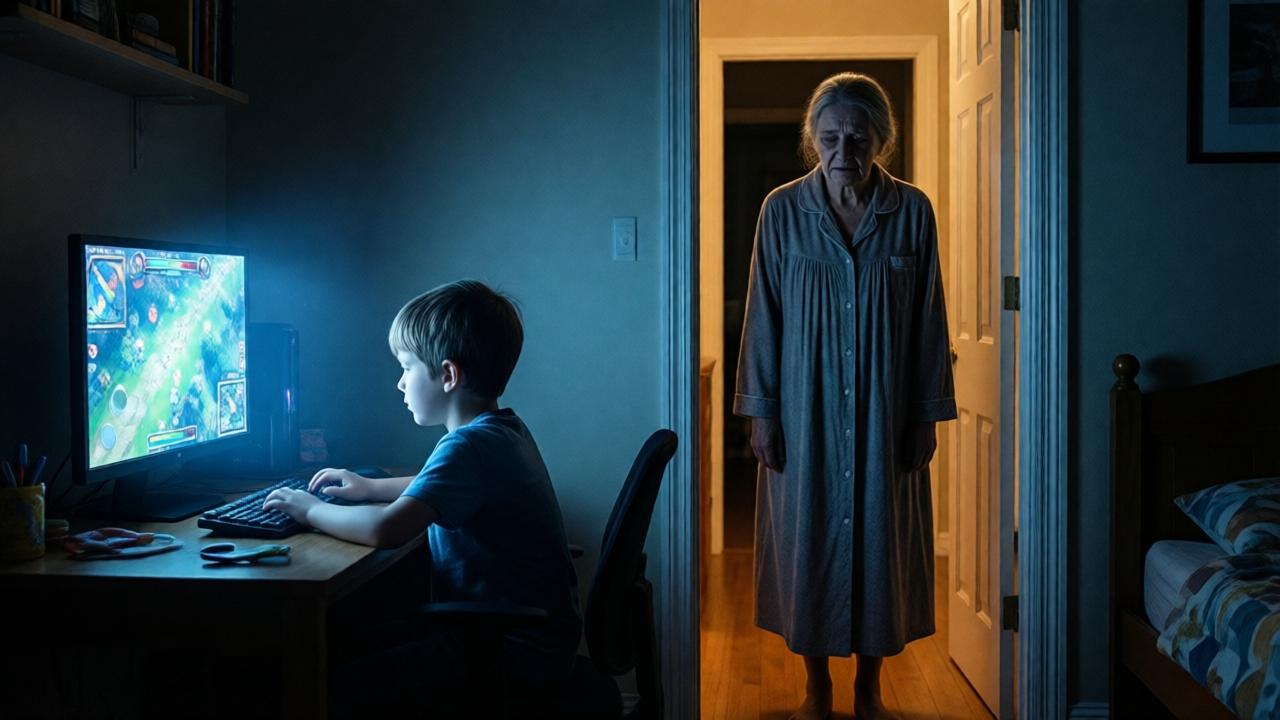
In the evening came the deception. A test with a devastating grade transformed under his hand into a shiny A. With correction fluid and a steady hand, he painted over the truth. Then came the moment that would break her heart, unbeknownst to her. “Grandma, look!” he exclaimed, beaming with false pride, waving the paper. The old woman pulled him close, her eyes filling with tears of emotion. “My boy, you make me so proud,” she whispered as her rough hand brushed over his cheek. But that night, as she suspected his peaceful sleep, he locked himself in. The blue light of the screen illuminated his focused face, while laughter and battle sounds emanated from his headphones.
Suddenly, a soft creak. The door opened a crack. “What are you doing?” The grandmother’s voice was gentle but concerned. “Did you do your homework?” A gesture that once signified care now met a wall of contempt. “Leave me alone, old woman!” he hissed, not taking his eyes off the screen. “I’m in virtual class right now.” Confusion spread across her face. “Virtual? What is that?” Her naive question was the spark that ignited his anger. “You have no idea, you’re uneducated,” he shot back coldly, clipped. In that moment, her heart not only contracted – it seemed to break. Silently, like a ghost, she crept back.
The truth came a few days later, quietly and devastatingly. While the boy was sent out shopping, there was a knock at the door. The teacher spoke in a subdued voice: “Your grandson is not trying at all. He is lazy in class.” The grandmother’s world began to wobble. “That can’t be. He is the best in the class,” she whispered, but the words sounded hollow, as if she already sensed the deception. “He always shows me A’s.” The teacher’s response was a gentle dagger: “That’s all a lie.” When the boy returned, his deception was doubled. He gave her only part of the groceries, keeping the rest for himself. But this time, his gaze met a wall of steel.
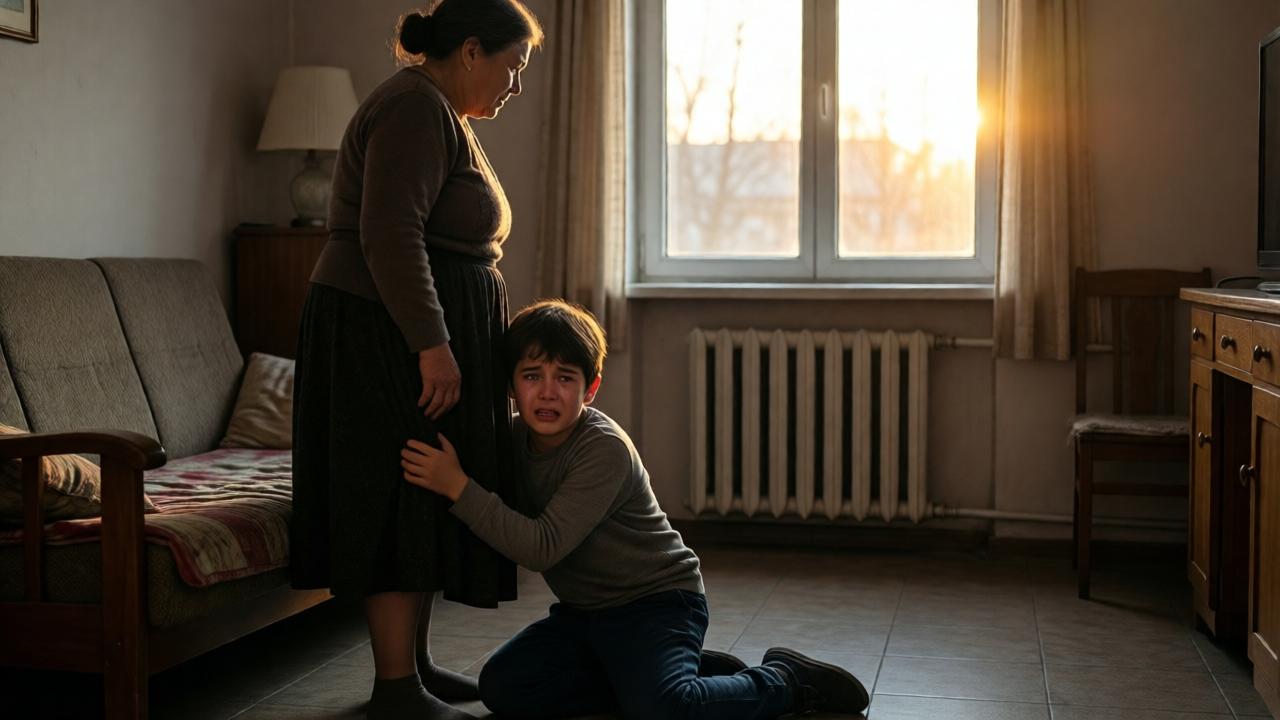
“Enough.” Her words were quiet, but they echoed in the room like a verdict. All softness had left her voice. “I will not support you any longer. You are going to a home.” The boy, overwhelmed by the sudden finality, collapsed to the ground. His hands clutched desperately at the fabric of her skirt. “No, Grandma, please! I will do better!” But in her eyes, there was no spark of yielding left, only the pain-filled shine of an irrevocable decision. In that moment, he understood what he had lost: not just a home, but an unconditional love that he had taken for granted and abused beyond recognition. The freedom he had taken was now his punishment.
The moral of this dramatic story is not hidden; it screams from every detail: We often deceive and exploit those who love us most sincerely. We do it until their hearts are so heavy with disappointment that they can bear no more lies. The grandmother’s love was an inexhaustible well – yet even the deepest well can run dry when poisoned with falsehood. Her final decision was not the revenge of a bitter woman, but the last act of love from a wise one: Sometimes the most painful cut is the only true way to heal.