

The air was thick with the scent of grilled food and the low hum of a busy evening when the waiter, Leo, stepped outside. His task was simple: clear a vacant table. But the night had other plans. Two figures emerged from the shadows, moving slowly. They were sisters, their faces etched with exhaustion. The elder one spoke first, her voice barely a whisper, “Please, can we have some leftovers? We’re starving.” The younger sister, her eyes wide with desperation, added, “We’ve been stranded. No money or phone. Please, anything.” Leo looked them over, his expression unreadable, then turned and walked back inside without a word. A heavy silence fell. “I told you,” the younger sister sighed, her shoulders slumping. “Nobody cares. Four days, no food. Gosh.”
Minutes stretched, each second a weight. Then, the door swung open again. Leo emerged, not with a trash bin, but with two steaming plates of fresh, hot food. “Please, sit,” he said gently, gesturing to the cleared table. Relief washed over the sisters as they sat, their hands trembling near the cutlery. But fate intervened cruelly. The restaurant manager, keys in hand and ready to leave, froze in the doorway. His face contorted with anger. “Who are these people?” he bellowed, his voice cutting through the night. “Did I open this place to feed street rats?”
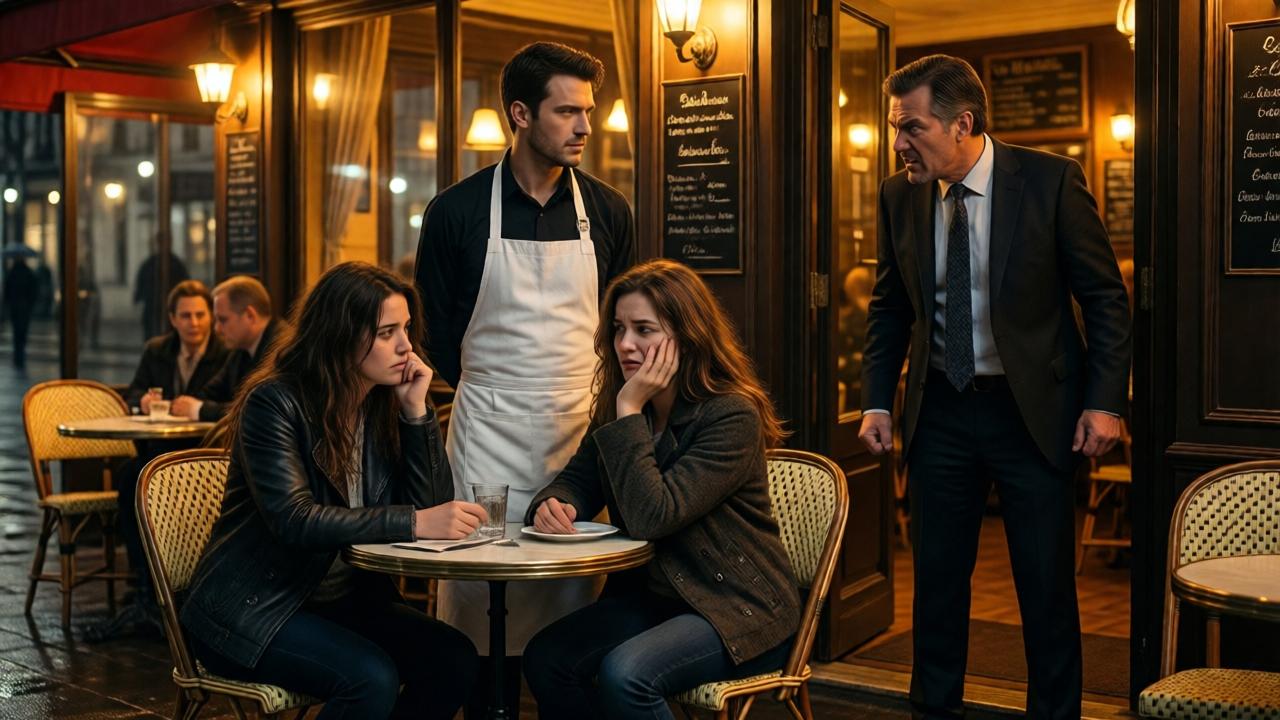
“Sir,” Leo said quickly, stepping forward. “I’ll pay for it myself. They’re starving.” The manager scoffed. “I don’t care. I want them gone.” He pointed a finger at Leo. “Before they chase away those with actual money, make sure they leave.” With a final glare, he got into his car and sped off into the night. The moment the taillights disappeared, Leo sprang into action. He quickly packed the meals into takeaway containers, added some bottled water, and pressed a folded bill into the elder sister’s hand. “Be careful out there,” he murmured. Tears filled their eyes as they hugged him tightly, a wordless gratitude, before vanishing back into the darkness.
The reckoning came the next day. The manager called Leo into his office, a cold smile on his face as he replayed the CCTV footage. “You chose to disobey your boss for what? Two random beggars?” Leo stood his ground. “Sir, I paid with my own money.” The manager’s smile vanished. “You’re fired. Get out.” Just like that, Leo’s job was gone, but the memory of the sisters’ grateful tears stayed with him, a small ember of warmth in the cold reality of unemployment.
Eight years later, that ember had grown into a steady flame. Leo now owned “The Humble Plate,” a modest but bustling restaurant built on sweat and principle. One lunch service, he served an elegant woman in a tailored suit. As he walked back to the kitchen, a thought flickered: “Her face looks familiar.” He brushed it off, attributing it to a long day. Suddenly, the peace shattered. His landlord, Mr. Brant, barged in, face red with fury. “The rent, Leo! It’s three days late!” Leo pleaded nervously, “Please, just a week. Business has been slow lately.” Brant laughed, a harsh, dismissive sound. “Ha! By tomorrow, I’ll shut this place down for good.” He stormed out, leaving a chilling silence in his wake.

The well-dressed woman had quietly paid her bill and left. Leo felt the walls closing in, the dream of his restaurant crumbling. Then, ten minutes later, the door chimed again. It was her. She walked back in, calm and purposeful, holding a legal document. She placed it on the counter before him. “Sign this,” she said softly. Leo, bewildered, scanned the paper. It was a property transfer deed. “I don’t understand,” he stammered. “Why would you do something like that for… a stranger?” Her smile was radiant, unlocking the memory he had buried for years. “Eight years ago, you fed two starving sisters outside a restaurant.”
The world seemed to tilt. Leo’s eyes filled with tears of disbelief and overwhelming emotion. “Oh, my God. It’s really you. Wow!” The woman, whose name was Clara, reached out and held his hand. Her voice was soft but firm. “You have no idea what you did that day. You gave us a reason to keep going. That meal, your kindness… it was the turning point. Today, I’m returning that kindness.” In that moment, the full circle was complete. The fired waiter, the lost sisters, the threatened restaurant—all threads woven into a tapestry of profound human connection. Leo signed the paper, not just acquiring a building, but receiving a monumental testament to a truth he had always lived by: a small act of kindness can return as a life-changing blessing.

And so, the story that began with a whispered plea on a cold night found its resolution in the warm light of “The Humble Plate.” Clara didn’t just save Leo’s business; she became a silent partner, her investment a perpetual reminder of their shared history. The restaurant flourished, its reputation built not just on good food, but on a legend of kindness repaid. Leo often shares the tale with new staff, always ending with the same lesson: “We never know the future weight of our smallest compassionate choices.” As for the sisters, their journey from desperation to success remained a private triumph, but its echo forever changed the life of the man who once simply offered a meal.