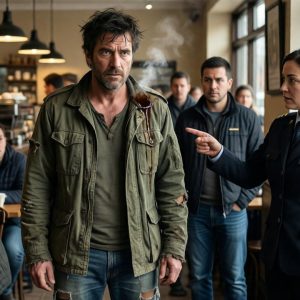

The airport terminal was a symphony of chaos—rolling suitcases, boarding calls, and the palpable anxiety of travelers on tight schedules. John checked his watch for the tenth time, his fingers nervously tapping his ticket. This interview was his one big chance. Just as he joined the boarding queue, a small hand tugged at his coat. He looked down to see a little girl, her face streaked with tears. “Please help me,” she sobbed, her voice barely a whisper against the din. “My mom, she’s not waking up.”
A split-second decision hung in the balance. Everyone streamed past, eyes fixed on gates and screens. John looked from the crumpled ticket in his hand to the child’s terrified eyes. “Without a word, he followed her,” he would later recall. He found her mother slumped on a bench, unconscious. The girl clung to his side. “Please help me,” she pleaded again, her small frame shaking. “She’s all I’ve got.” In that moment, the interview, the flight—everything faded. His only focus was the woman’s shallow breath.
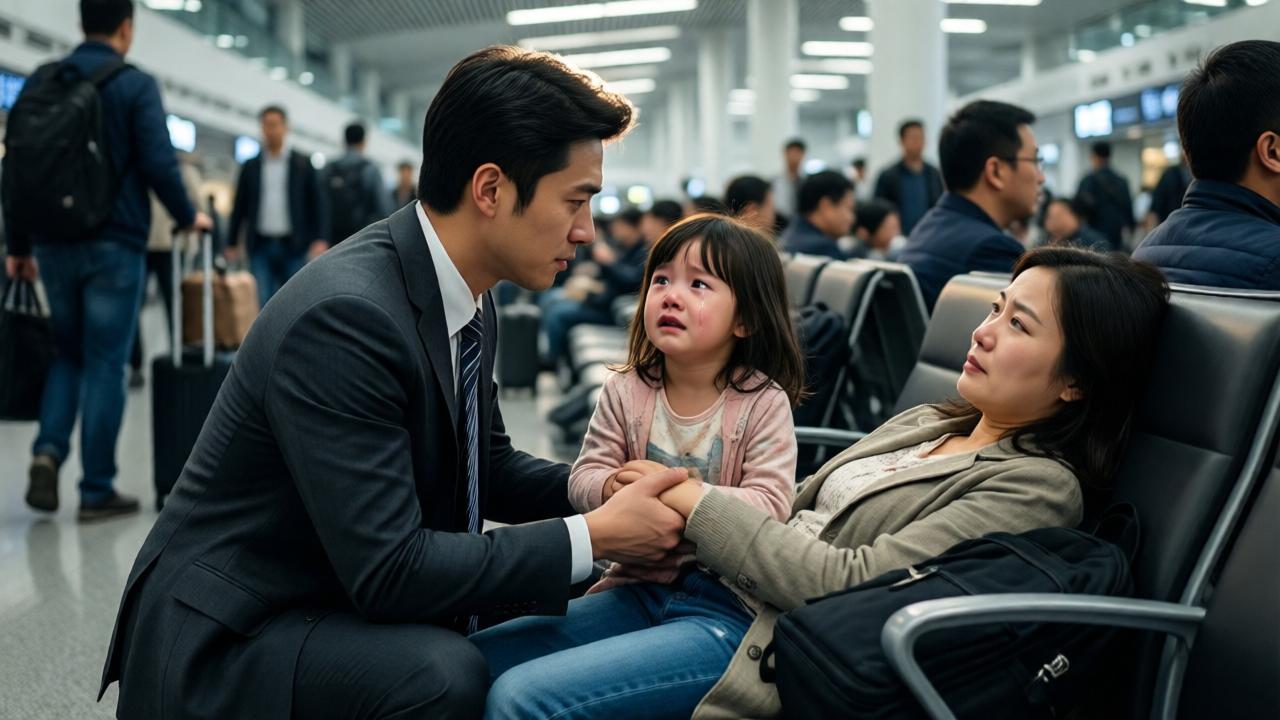
Action replaced panic. John called an ambulance, his voice steady as he relayed details to the dispatcher. He stayed on the line, checking the woman’s pulse, a lifeline in the sterile airport noise. “Keep breathing, help is coming,” he murmured, more to himself and the little girl than to the unhearing mother. Fifteen eternal minutes later, the paramedics arrived with a gurney. As they wheeled her away, the girl handed John a scrap of paper with her mother’s number. “Just to keep in touch,” he promised. Then, he ran.
He sprinted through the terminal, his dress shoes slipping on the polished floor, only to arrive at the gate as the jet bridge was retracting. The plane was gone. The interview, prepared for with sleepless nights, was gone. A wave of despair crashed over him. The dominoes continued to fall that evening. Returning to his apartment, he found a notice taped to his door: he had three days to vacate. Sitting in the dark, the weight of his ruined plans felt crushing. Yet, he remembered his promise. He dialed the number.

A weak but grateful voice answered. “I don’t know who you are,” the woman said, “but you’ve saved my life. My daughter told me everything.” She introduced herself as Clara. The doctors had diagnosed a severe cardiac arrhythmia, triggered by stress and exhaustion. “They said I must take it easy if I want to live long,” she explained. She invited him to her home the next day. John arrived, expecting perhaps a thank-you card. Instead, Clara, propped up on a sofa, made an offer that left him speechless.
“I built a logistics company from nothing,” Clara said, her gaze firm. “But this… episode has shown me I can’t run it alone. I need someone with integrity at the helm. Someone selfless. I saw that in you.” She outlined the role: managing her company. The offer included a company car, a spacious house on the property for stability, and a monthly salary of $10,000. John stood frozen, the eviction notice, the missed flight, the lost interview swirling in his mind, now rendered meaningless. He broke down, tears of relief and joy streaming down his face. Clara smiled softly. “When you do good for others, life always finds a way to bring it back to you.”

**Part Two: The Ripple Effect**
John’s first month at Astra Logistics was a whirlwind of learning. Clara, now a mentor, guided him from her home office. The little girl, Mia, would bring them cookies, her earlier terror replaced by a bright smile. One afternoon, reviewing old contracts, John found a major discrepancy with a key supplier—a legacy of Clara’s former, less-scrupulous partner. “We need to fix this, ethically, even if it costs us short-term,” John insisted. Clara nodded, proud. “This is why I chose you.” His principled stand initially strained relations, but within months, it bred such trust that the supplier became their most loyal partner, bringing in new business.
The story doesn’t end there. A year later, John was overseeing a large charity shipment for a children’s hospital. The event was covered by local news. Watching the broadcast was the CEO of the very company John had missed his interview to join. Impressed by the profile of John’s “overnight success,” the CEO reached out. “Your reputation for integrity precedes you,” he said over lunch. “We missed you once. We’d like to propose a merger between our firm and Astra Logistics, with you as the head of the new division.” John, after discussing it with Clara, now fully recovered and eager to travel with Mia, accepted. The missed flight had not just given him a job; it had built a legacy. The lesson was clear: the most profound opportunities often arrive disguised as detours, and true wealth is built on the currency of compassion.