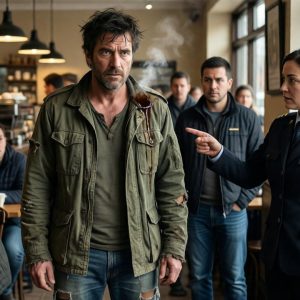

The door to the cheap room clicked shut, sealing me in a silence that hummed with the day’s humiliation. I stood there, the grime of my disguise feeling heavier than ever. The receptionist’s trembling voice echoed in my mind: ‘Don’t be afraid, sir. Tonight, you will have a bed.’ Her courage, standing against the manager’s venom for a stranger she believed had nothing, was a rare gem in a world polished to a cold, indifferent shine. I took out my ancient, cracked phone—the final prop in my charade—and dialed a number known only to a handful of people.
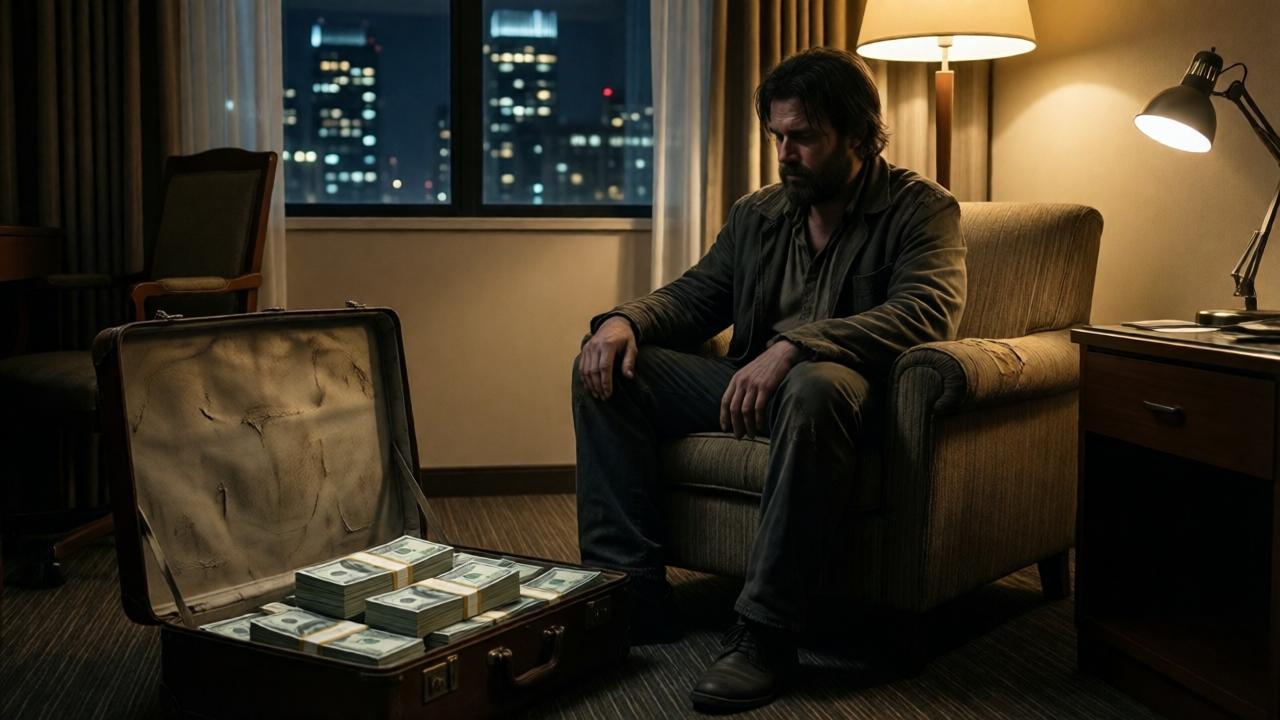
My head of security answered on the first ring. ‘Sir?’ he said, his voice a mixture of concern and readiness. ‘Tomorrow at 10 in the morning,’ I instructed, my voice now stripped of its earlier feigned weakness, ‘come to the hotel. Bring the team. And prepare the boardroom.’ I didn’t need to explain further. He knew the drill. The test was over; the reckoning was about to begin. I spent the night not in restless sleep, but in quiet contemplation, the suitcase containing one million dollars sitting unopened by the worn armchair.
The next morning at 9:55, the hotel lobby was its usual symphony of polished marble and hushed conversations. The manager, Mr. Braxton, was holding court near the concierge desk, boasting about maintaining ‘standards.’ Then, the grand entrance doors swung open. In walked six impeccably dressed individuals—my executive team and lawyers—followed by two discreet security personnel. They moved with a quiet authority that immediately changed the air in the room. They ignored the front desk and made a beeline for the elevators. The manager, sensing important guests, scurried over. ‘Welcome, sirs! How may I assist you?’ My head of security, David, didn’t break stride. ‘We’re here for Mr. Thorne. He’s expecting us.’
Confusion washed over Braxton’s face. ‘Mr. Thorne? I’m afraid we have no guest by that name…’ Before he could finish, the elevator doors opened on my floor. The team entered the boardroom I had instructed to be prepared. At precisely 10 AM, I walked out of my room. But I was no longer the homeless man. I had used the night to scrub away the dirt, and my personal assistant, who had arrived earlier with a garment bag, now stood beside me. Minutes later, I entered the boardroom in a tailored suit, my transformation complete. The look on the faces of my staff was one of professional calm. They were used to my unconventional methods.
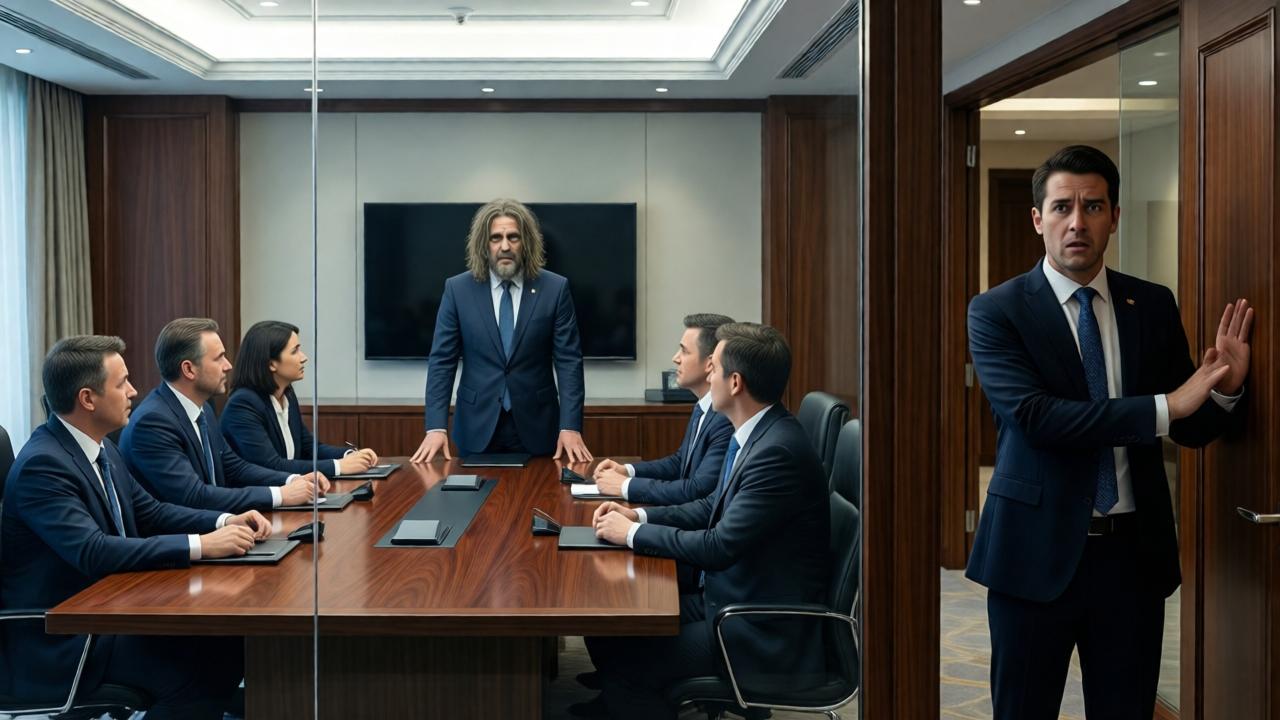
My first order of business was not a corporate strategy. ‘David,’ I said, ‘please ask the front desk receptionist from last night’s shift to come to the boardroom. And bring Manager Braxton as well.’ The silence that followed was profound. When the young woman, Sarah, entered, she was pale with anxiety, expecting to be fired for her insubordination. She didn’t recognize me. Then Braxton barged in, blustering. ‘What is the meaning of this? Who are you people?’ I stood up slowly, letting the silence stretch. ‘You told me yesterday,’ I began, my voice calm and clear, ‘that people like me only deserved a public restroom. You said I polluted the air.’ His eyes widened in slow, terrible recognition.
I turned to Sarah, whose eyes were now darting between my face and my suit, understanding beginning to dawn. ‘You, however, saw a person. You defended my dignity when I had none to show.’ I gestured to the head of HR. ‘Effective immediately, Mr. Braxton is terminated for gross misconduct and creating a hostile environment. Sarah,’ I continued, ‘your job is not at risk. In fact, your position is now Vice President of Guest Experience, with a mandate to overhaul our training to focus on humanity, not just hospitality. Your starting bonus is in this.’ I nudged the old suitcase, now open on the table. Her hands flew to her mouth as tears welled in her eyes. The manager was escorted out, sputtering protests that fell on deaf ears.

As the room cleared, I looked at Sarah. ‘You asked for no reward,’ I said, recalling her simple act. ‘But integrity like yours is the true currency of this business. The money is just a tool. This hotel, and every person in it, will now learn that lesson.’ She finally found her voice, quiet but steady. ‘I just did what felt right, sir.’ ‘Exactly,’ I smiled. ‘And that is why you will lead them.’ Walking to the window, I looked down at the bustling lobby, a kingdom I owned but had nearly lost to cruelty. The test was severe, but it revealed a truth more valuable than any fortune: character is the only suit that never goes out of style, and it can be worn by anyone, regardless of what covers their skin.