

The office door clicked shut behind the police officers, leaving a heavy silence in their wake. The CEO, who just hours before had been the ‘foul-smelling’ homeless man, leaned back in his leather chair, his eyes fixed on the kind woman, Sarah. “Your kindness touched my heart, especially when you gave me that $400,” he said, his voice now firm and clear, devoid of its earlier tremor. “Everyone else was just watching. No one cared. You’re the right person for this job.” Sarah sat in stunned silence, the weight of the moment settling upon her. The other candidate, the man in the expensive suit named Marcus, was gone, his arrogance having led him straight into handcuffs.

Sarah finally found her voice. “Mr.… I don’t even know your name. This was all a test?” “Call me Arthur,” he replied with a gentle smile. “And yes. Leadership isn’t about quarterly reports or market share alone. It’s about integrity when no one is watching and empathy for those you believe can offer you nothing in return. Marcus saw a target. You saw a person.” He opened a drawer and retrieved a familiar wallet, sliding it across the desk. “This, and the $800, were never really at risk. But your $400 was. That was the real currency being measured today.”
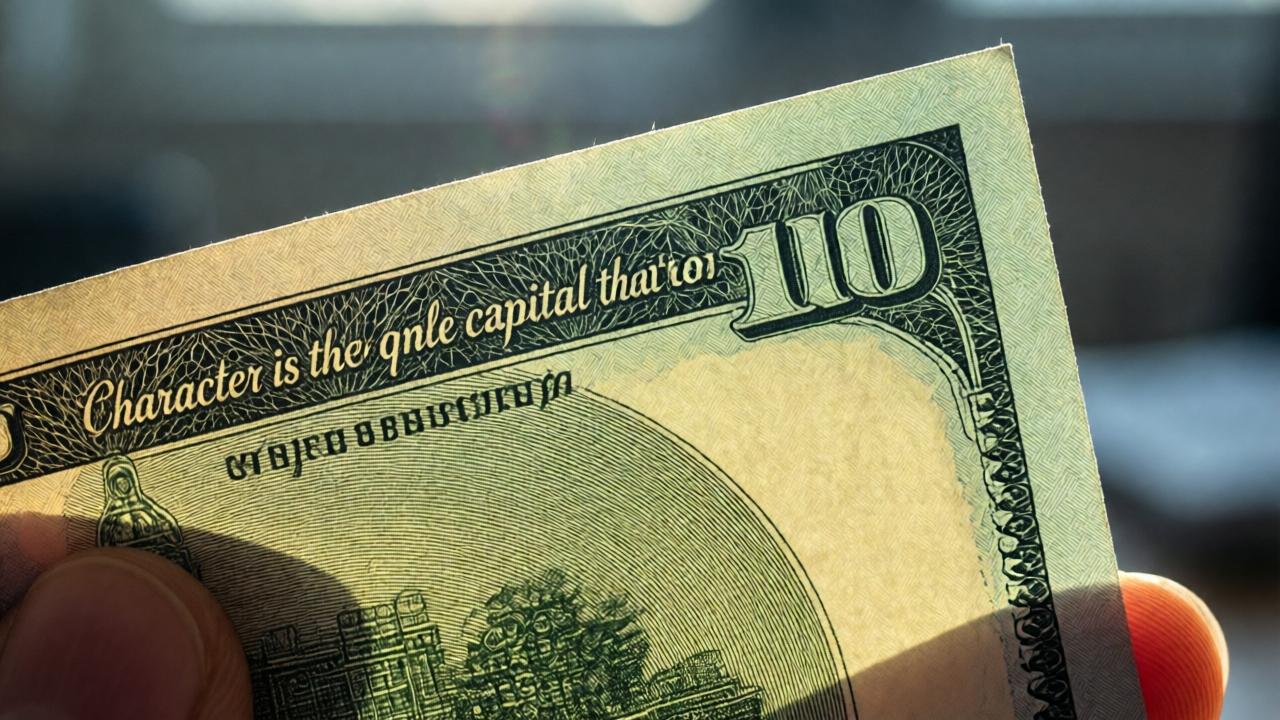
Arthur then produced the $400 bill Sarah had given him on the bus. “You asked about the note,” he said, holding it up to the light. “Turn it over.” Puzzled, Sarah took the bill. On the back, in tiny, precise print next to the security strip, was a single line: ‘Character is the only capital that never fails.’ “It was a marker,” Arthur explained. “Every bill from that specific batch carried that message. I needed to see if anyone would look closely enough to see value beyond the face amount. You didn’t just give money; you gave respect without expecting a return. That is the investment this company needs.”
The story, however, had a final chapter for Marcus. As he sat in the police station, protesting his arrest, an officer placed the stolen wallet into evidence. “It’s not stolen! It was a test!” Marcus insisted. The officer didn’t look up. “The complaint isn’t from the CEO, sir. It’s from the bank. The ATM you used this morning? It has a hidden camera that clearly shows you snatching the wallet from Mr. Arthur’s hand. The CEO’s test might have revealed your character, but this footage is what proves your crime.” Marcus slumped in his chair, realizing his downfall was sealed not by a powerful man’s whim, but by his own actions, captured in cold, digital clarity.
Back in the office, Sarah accepted the position, her first act as the new manager being to institute a community outreach program Arthur had long envisioned. “We’ll call it the ‘Second Look’ initiative,” she proposed. “Teaching our teams to look beyond the surface, in business and in life.” Arthur nodded, his mission accomplished. The old man who had trembled with helpless anger was gone, replaced by a leader who had restored his faith in humanity through one simple, costly act of kindness on a city bus. The $400 had been returned, but its value had been multiplied a thousandfold in the lesson it carried.

As for the note on the bill, it became a framed artifact in the company lobby, a permanent reminder. People often ask Arthur if he thinks one act of kindness is enough to judge a leader. He always gives the same answer, his eyes twinkling with the memory of a bus seat and an outstretched leg. “It’s never just one act,” he says. “It’s a pattern. Theft, cruelty, entitlement—that was Marcus’s pattern. Compassion, courage, and integrity—that was Sarah’s. The world will show you who people are. You just have to be willing to see it.”