

The silence in the station manager’s office was thick enough to choke on. The cleaner, his worn clothes a stark contrast to the polished mahogany desk, stood with his shoulders slumped in defeat. The businessman’s icy accusation—’You’re fired. Leave, now.’—still hung in the air. But as the cleaner turned to go, a final spark of dignity made him pause. ‘Sir, before I leave,’ he said, his voice soft but clear, cutting through the tension, ‘there’s something very important you need to know.’
The businessman, Mr. Thorne, arched an eyebrow, his arms still crossed. ‘Speak,’ he commanded, though a flicker of curiosity betrayed his stern facade. The cleaner took a steadying breath. ‘When I found your wallet,’ he began, ‘I saw the business card. But I also saw something else. Tucked behind the card was a small, folded photograph. A picture of a little girl, smiling, with the words ‘For my angel, Ava’ written on the back.’ Mr. Thorne’s posture stiffened imperceptibly. ‘I remembered that ring in the wallet,’ the cleaner continued. ‘It wasn’t just shiny gold. It had an inscription inside the band. I have poor eyesight, sir, but I got close. It read, ‘To E, love forever.’ I closed the wallet then, because that money wasn’t just cash. It was attached to a person, to memories. I couldn’t take that from you.’
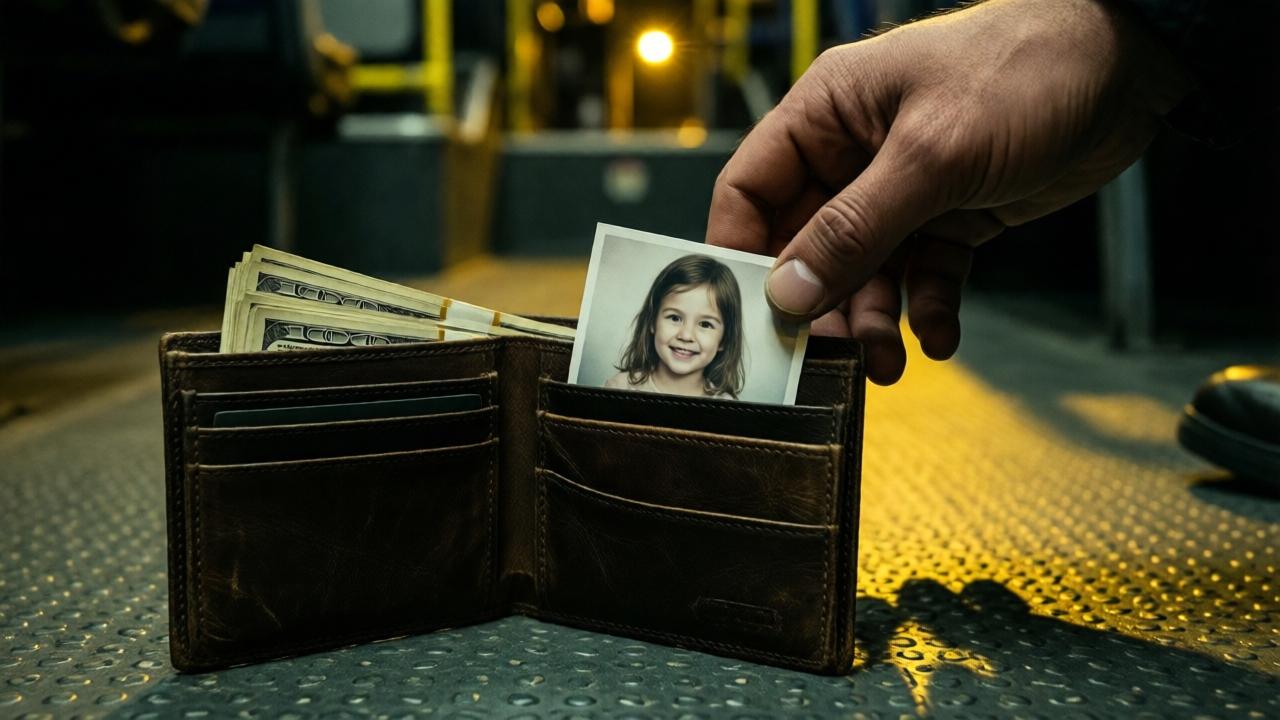
A profound silence followed. The station employee who had falsely accused the cleaner shifted uncomfortably, his earlier confidence evaporating. Mr. Thorne’s cold expression finally cracked, revealing a wave of stunned realization. The photograph and the ring’s inscription were details he had never mentioned to anyone, not even his assistant. ‘The employee told me the wallet was returned empty,’ Mr. Thorne said slowly, his gaze shifting from the cleaner to the now-pale man behind the desk. ‘He said you stole the money. But you just described contents that were never publicly known.’ The cleaner simply nodded. ‘They were all there when I handed it over, sir. Every bill, every card, the ring, and the photo. I swear on my mother’s health.’
The tension pivoted. Mr. Thorne’s eyes, now sharp and calculating, locked onto the squirming employee. ‘Explain,’ he said, the single word dripping with quiet menace. The employee stammered, ‘I—I must have been mistaken, sir. I didn’t check thoroughly…’ ‘You checked thoroughly enough to call your cousin and plan to split the contents,’ a new voice interjected. The office door opened, and the security guard who had fetched the cleaner entered, holding a smartphone. ‘I recorded your conversation in the break room yesterday after the wallet was locked up. You said, ‘Poor people don’t deserve good luck anyway.” The trap, it seemed, had been set for the wrong person all along.
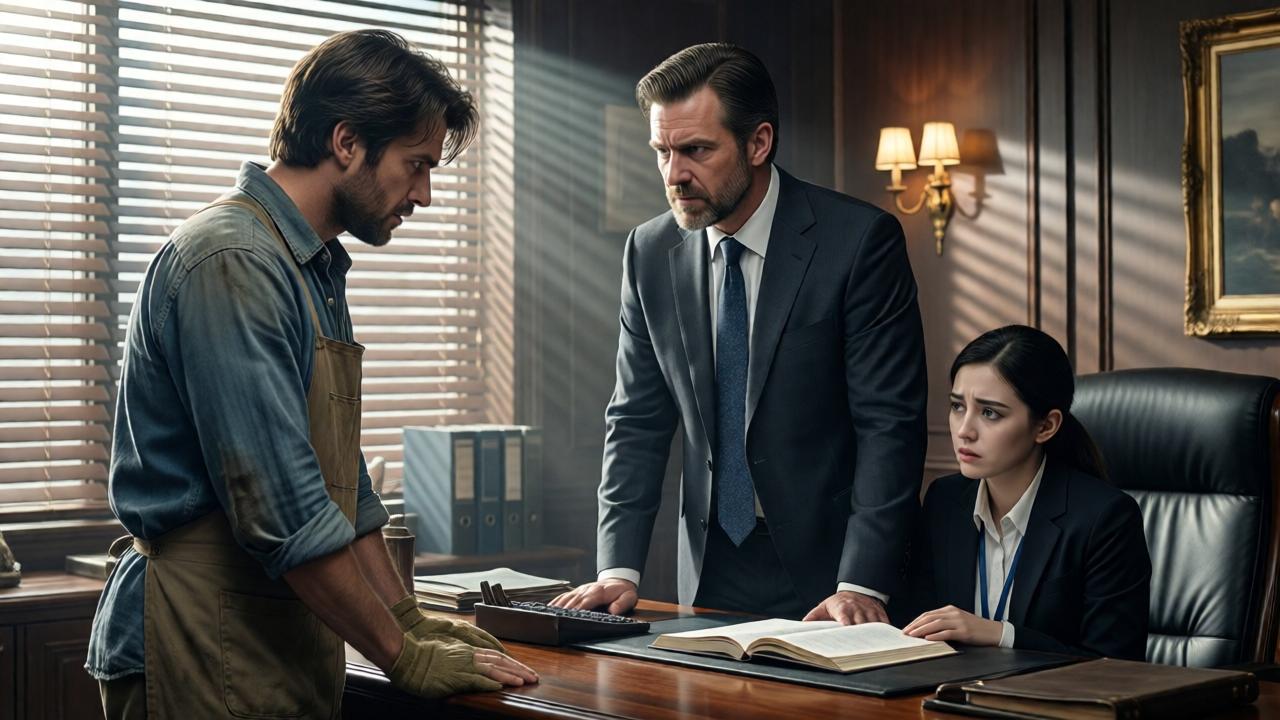
The following minutes were a whirlwind. The deceitful employee was escorted out by security, his career in ruins. Mr. Thorne turned back to the cleaner, who still stood quietly, the storm of injustice having passed over him. ‘You passed the test,’ Mr. Thorne said, his voice now carrying a respect that was absent before. ‘Not the test I thought I was administering, but the real one. You saw a person, not a payout. The job of station supervisor is yours, as promised. And the reward for honesty is doubled.’ The cleaner’s eyes, which had held tears of frustration moments ago, now welled with a different emotion. ‘Thank you, sir. But the job is reward enough. My family… we just need a chance.’
Weeks later, the bus depot had a new supervisor. He was often seen on the platform, not in a suit but in clean, practical clothes, always with a word of encouragement for the cleaning and maintenance staff. The story of the wallet became a quiet legend, a reminder that integrity often wears a humble coat. One evening, as the new supervisor locked up, Mr. Thorne approached him. ‘My daughter, Ava, she’s been asking about the man who saved her picture,’ he said, a genuine smile on his face. ‘She wants to thank you herself. Would you and your family join us for dinner on Sunday?’ The cleaner, now supervisor, met his employer’s gaze and finally allowed himself a full, relieved smile. ‘We would be honored, sir.’ In the end, the wallet had held more than money; it held a mirror, and the man who returned it saw his own reflection clearly—and liked what he saw.