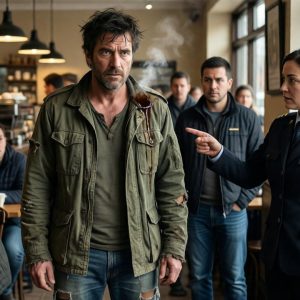

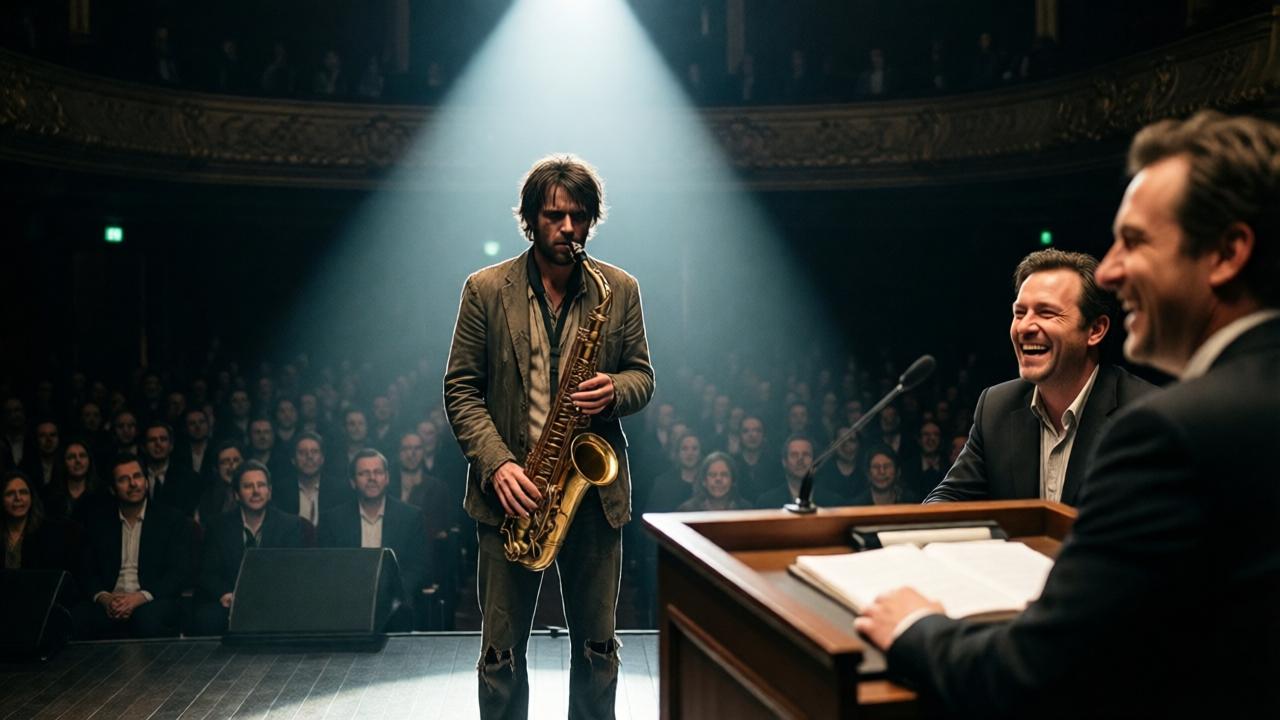
The spotlight was a merciless white eye, exposing every frayed thread on Daniel’s jacket. The talent show judge, Richard, sneered from behind his polished table. “If I play well, will you give me a plate of food?” Daniel had asked, his voice a raw whisper. Richard’s reply sliced through the hall’s anticipatory hush: “I’ll give you a whole restaurant and even kiss you on the lips, you bum!” The audience erupted in cruel, cascading laughter. Daniel didn’t respond. He simply took a deep, shuddering breath and raised the weathered saxophone to his lips.
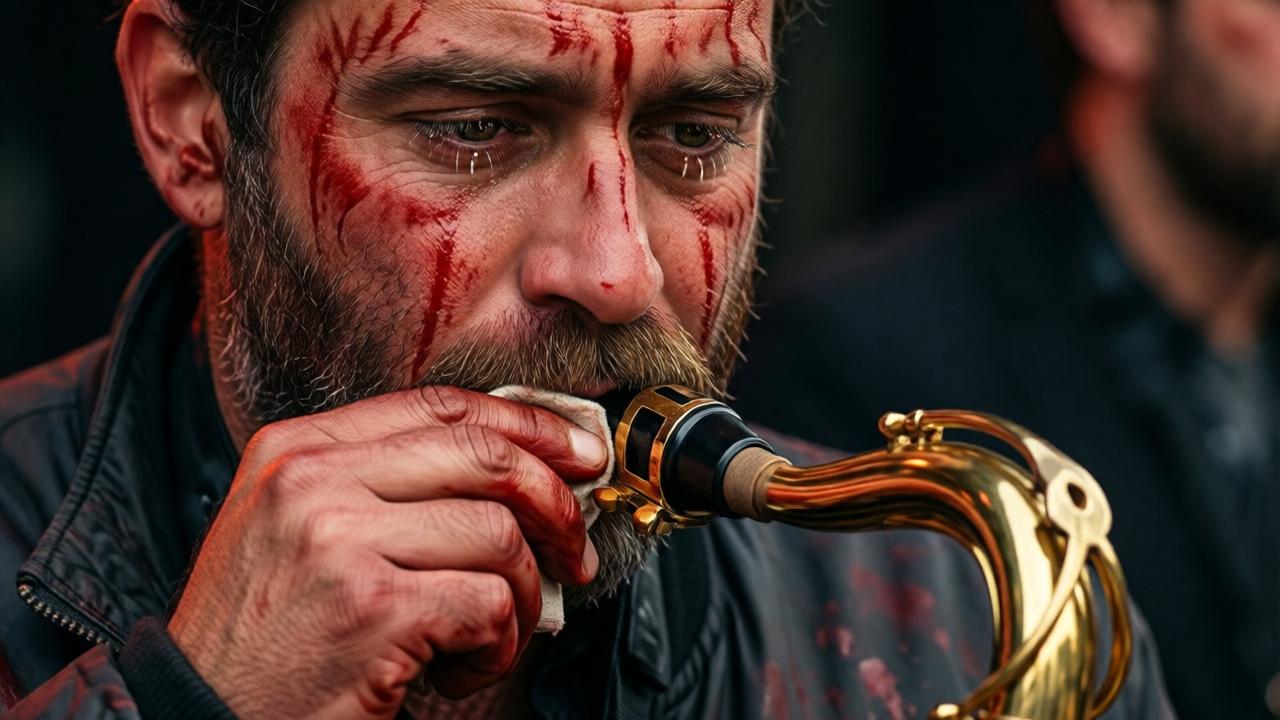
He played the first note. It was weak, shaky, but it was a sound—a promise. Before the second note could form, a sickening splash echoed. A bucket of garish red paint, rigged from the rafters, drenched him from head to toe. It streamed down his matted hair, his closed eyes, his threadbare clothes, coating the brass of his saxophone. The hall exploded with even louder, more vicious laughter. Backstage, Vincent and the other contestants were choking with glee. Richard stood, his face a mask of triumph, and shouted over the din, “Did you really think we’d let a bum play here?” From the audience, a woman named Claire rushed forward, her heart breaking. “Come on, Daniel, let’s go,” she pleaded, tears in her eyes. “You don’t deserve this.” Daniel took a step to leave, the weight of humiliation crushing him. Then he stopped. A memory, clear as a bell, cut through the noise: his foster mother Rose’s voice, gentle but firm. “You have a gift, you can’t waste it.” He turned back to the jeering crowd, paint dripping from his chin. His voice, when it came, was low and steady. “Paint or no paint,” he declared, “I will play.”
He raised the instrument again. And then, he began. The music that flowed out was not shaky. It was a deep, mournful, and fiercely resilient blues. It was his story. “They told me I was nothing,” the saxophone seemed to weep. “Kicked me out into the cold. They laughed at my bare feet. But God had other plans. I’m still standing. Despite the pain and shame. God remembers. God remembers me.” The melody shifted, becoming a haunting lullaby. “My father left this song. In these broken keys. And every note that I play. It’s him still fighting beside me.” The final, soaring refrain was a declaration: “After all these lonely years, I’m still standing. Despite the pain and the tears. God remembers. God remembers me.” Absolute, stunned silence gripped the hall. No one moved. Then, as one, the entire audience rose to its feet—a wave of applause, cheers, and choked cries shattering the quiet. Claire rushed onto the stage, her face streaked with tears. “Where,” she gasped, her voice trembling, “where did you learn that song?” Daniel, paint-smeared and radiant, said it was the only memory he had left of his parents, that his father played it every night before he fell asleep. Claire turned deathly pale. It was the song her husband played for their son every night. The son who had vanished on a family trip fourteen years ago. Her husband had died of a heart attack weeks later, from the grief. The embrace that followed on that paint-spattered stage—a mother clutching her lost child, a son finally found—made the entire audience weep. As they held each other, Richard was booed into a shameful retreat, dragged away by security. The bum they had sought to destroy had, with one unbreakable song, just found his way home.