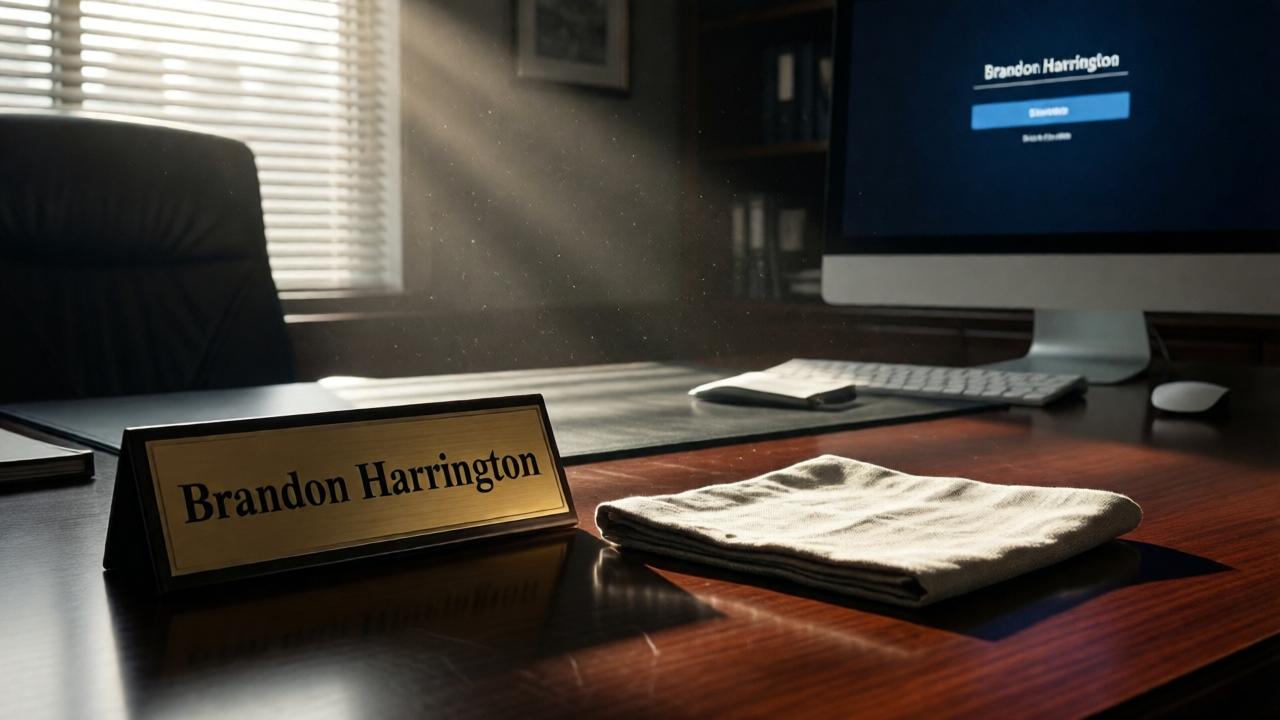

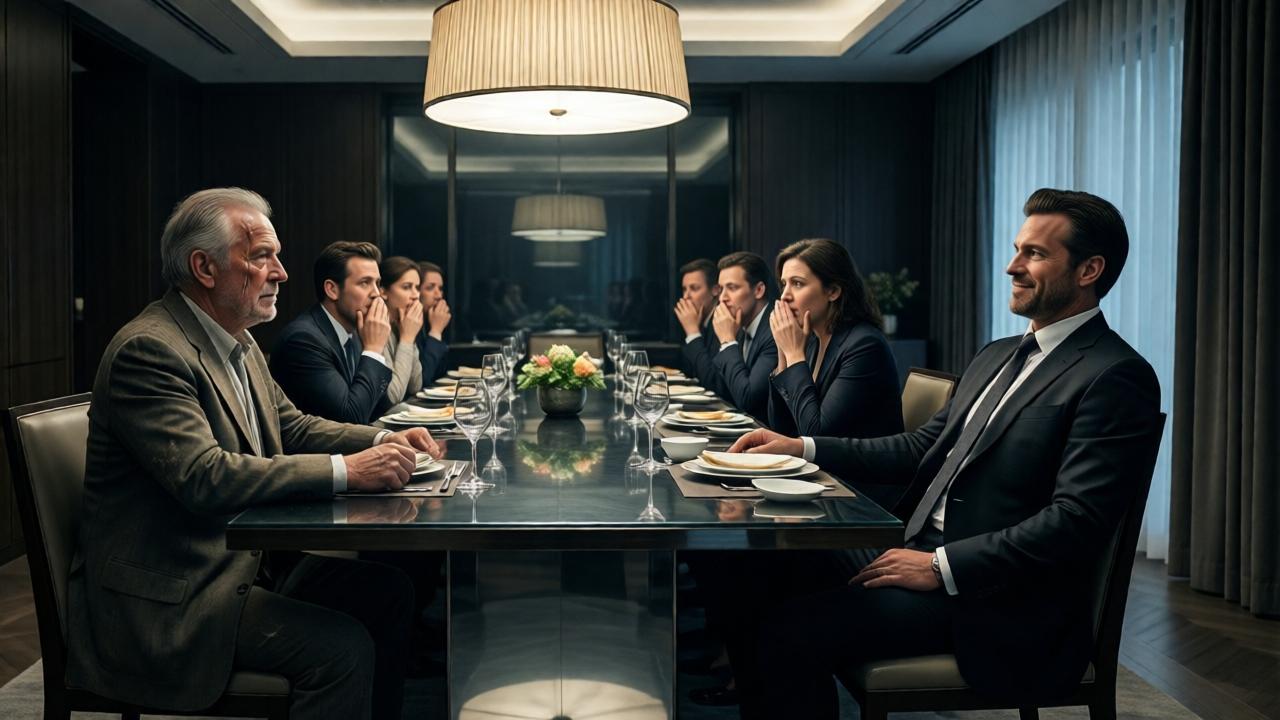
The spit was warm and wet against my cheek, a visceral punctuation to a sentence of betrayal decades in the making. At the head of the long, polished table, my son Brandon leaned back, a smirk of triumph playing on his lips as his wife and their friends stared in a mixture of horror and perverse amusement. I, William Harrington, did not move. I let the insult sit there, a grotesque badge, while the ghost of my late wife seemed to whisper from the empty chair beside me. ‘You live off my charity and still say no to me?’ Brandon had sneered moments before. ‘I built everything you’re sitting in. Then act like you’re grateful. This house, this company, all of it is mine.’ I had simply looked at him, this boy I had carried on my shoulders through construction sites, and asked, ‘You really believe that?’ His answer was a cold, assured ‘I know it.’
The room was silent save for the clink of a wine glass someone nervously set down. I had not raised my voice when he accused me of killing his mother with my frugality, a lie so venomous it stole the air from the room. My dignity, I had learned long ago, did not need permission from anyone, least of all a man who measured worth in carats and horsepower. For years, I had played the part of the washed-up construction worker, wearing threadbare suits and driving a rusted sedan, clipping coupons not out of need, but as a filter. It was the last shield I had, a way to see the unvarnished truth of the people around me. Brandon had failed every test.
I finally moved. With a calm that felt supernatural, I placed my hands on the table and stood. I picked up my linen napkin, but instead of wiping my face, I folded it neatly beside my plate. The act was deliberate, a silent sermon. ‘Check your accounts tomorrow morning,’ I said, my voice barely above a whisper yet cutting through the silence like a blade. Brandon’s smirk faltered. ‘What?’ he asked, confusion replacing his bravado. ‘Dinner’s over,’ I stated, not to him, but to the room. I turned and walked, not to the bathroom to clean myself, but straight through the lavish living room he loved to show off, and out the heavy front door into the crisp Chicago night.
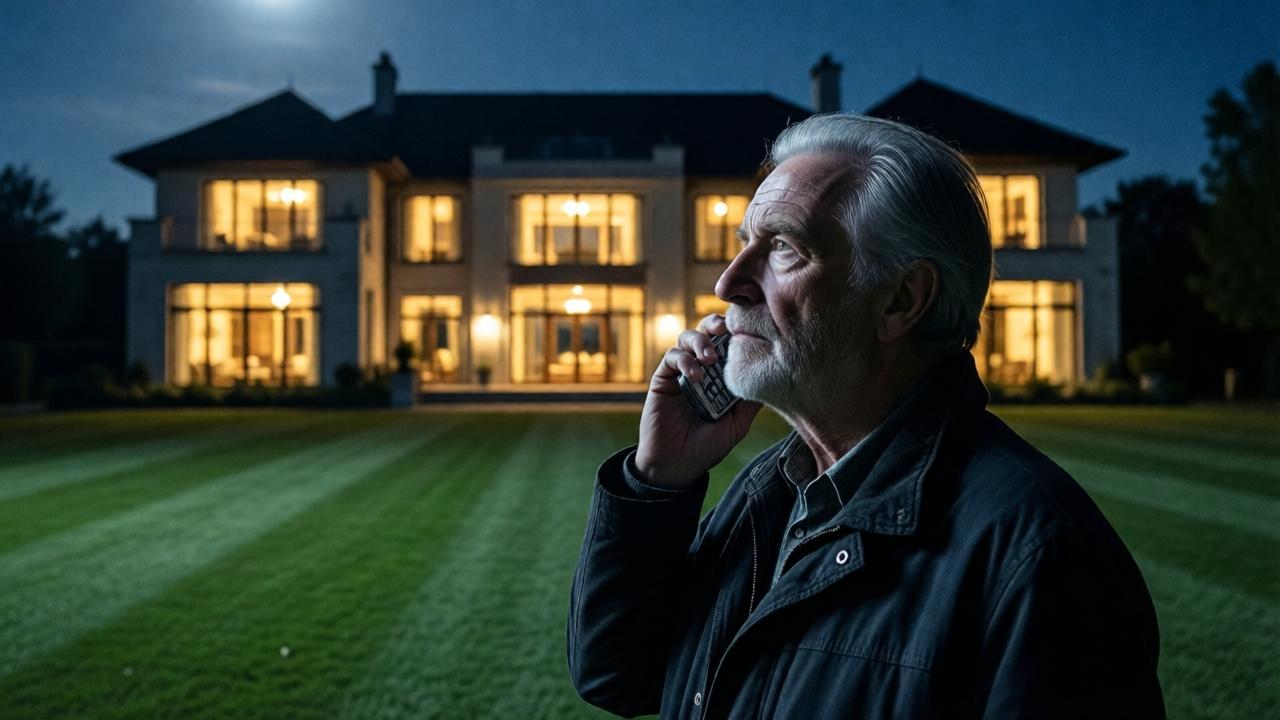
The cold air was a relief. I stood on the immaculate lawn of the six-bedroom home I had paid for in cash, the deed held in a trust he knew nothing about. The company where he played CEO, Harrington Holdings, had never left my control; I had merely let him sit in the big office. From my jacket pocket, I pulled out an old flip phone, a relic in the world of the devices his guests were likely now using to discreetly record the scandal. I dialed a number memorized decades ago. ‘Arthur,’ I said when my lawyer and oldest friend answered. ‘It’s time. Initiate the Sunset Protocol.’ On the other end, Arthur let out a long sigh, not of surprise, but of sorrowful resolution. ‘For all assets?’ he asked. ‘Every last one,’ I confirmed. ‘The house, the company accounts, the cars, the portfolios. Pull the foundation out from under it all.’
Back inside, I learned later, Brandon was trying to laugh it off, telling his guests, ‘See? He can’t even face reality. He’ll come crawling back when he needs money for his pills.’ But a nagging doubt had been planted. He pulled out his phone, not to socialize, but to refresh his banking app, a nervous tick starting in his jaw. He would see nothing amiss until morning. The system Arthur had built was elegant and silent; it would not claw back what was already spent, but it would seal every faucet of future wealth. The trusts would dissolve, the shell companies would collapse into the parent entity I solely controlled, and the property titles would revert. His charity was about to return to its source.
I got into my rattling sedan, the engine coughing to life. As I drove away from the golden cage I had built, I felt no anger, only a profound, weary clarity. The spit on my cheek had dried. Brandon thought he was marking his territory, but he had only sealed his own fate. He had been given every advantage, every lesson, and had chosen entitlement over empathy, cruelty over character. My final lesson for him would not be delivered with a shout, but with a silence more deafening than any explosion. It would be the silence of a disconnected phone line, the silence of a locked office door, and the silence of a bank balance reading zero. He wanted to believe it was all his. Tomorrow, he would learn the true meaning of the word ‘mine.’