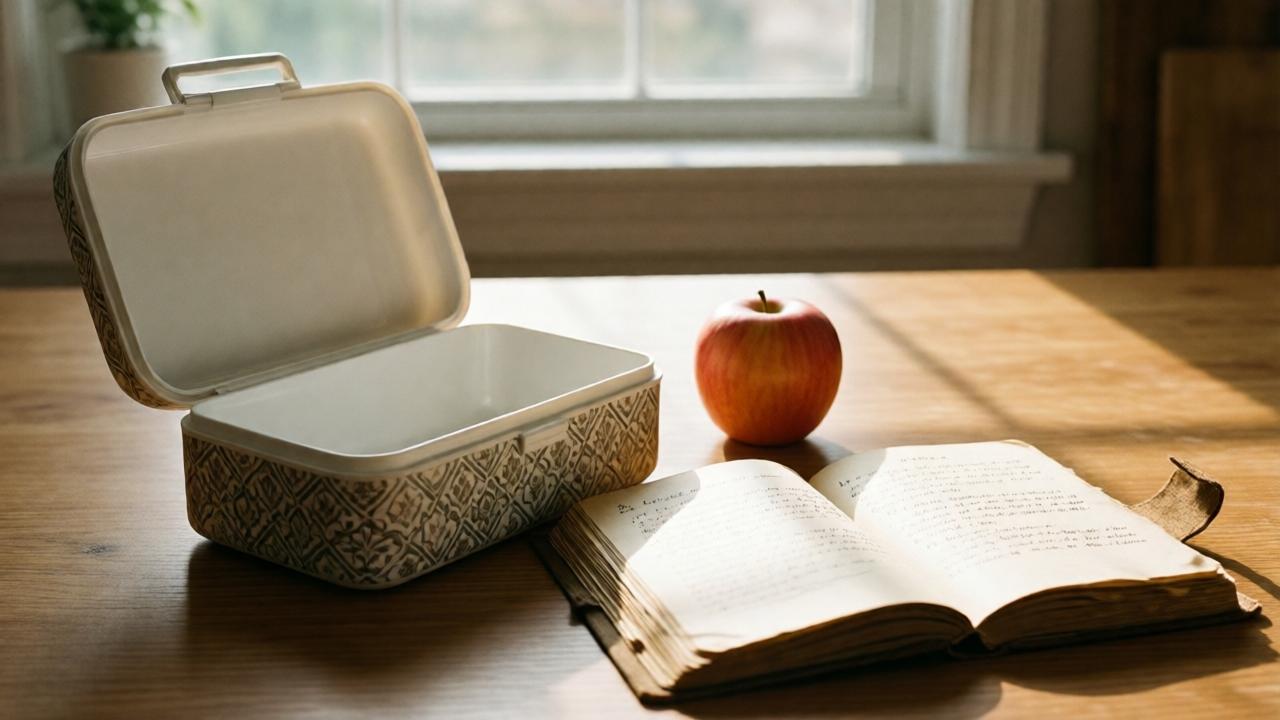

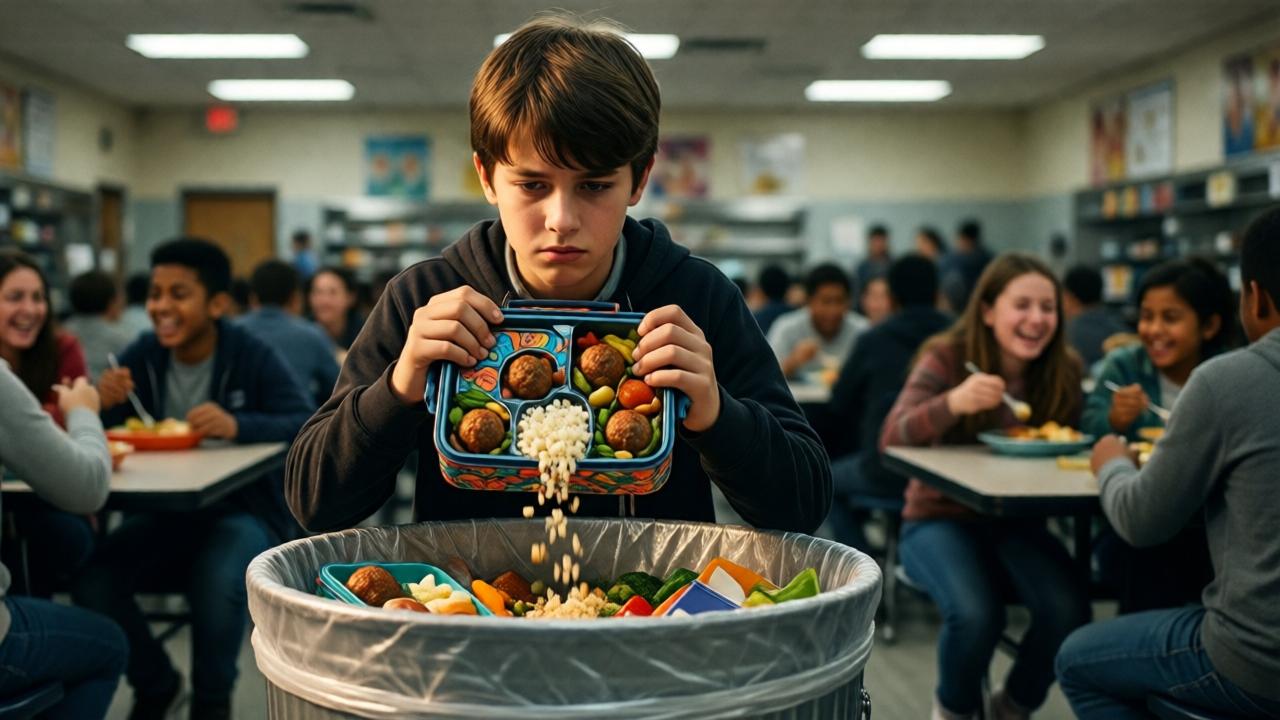
The ritual was always the same. As soon as the school bell rang for lunch, Leo would find a quiet corner of the cafeteria, his heart pounding. With a furtive glance to ensure none of his friends were watching, he would open the colorful container his mother had packed that morning. The sight of the carefully arranged rice, the lovingly shaped meatballs, and the handwritten note—’For my strong boy’—would twist his stomach with a different kind of hunger. But the mocking laughter from the table where kids ate shiny, branded snacks echoed louder. “What is that weird smell?” one had sneered just last week. Without another thought, Leo would dump the entire contents into the nearest trash bin, keeping only the apple. He’d return to his table, crunching loudly, projecting a casual air. “Not that hungry today,” he’d shrug.
At home, the performance continued. “Do we have something to eat?” he’d ask, his voice edged with a genuine emptiness that had nothing to do with food. “In a few minutes, okay, sweetie?” his mother, Clara, would reply, wiping her hands on her apron. “But I always pack a lot of food so you wouldn’t get hungry.” Leo would then produce the spotless, empty container. “See? I always eat all the food you packed for me.” Clara would smile, a mix of pride and worry in her eyes. “You’re growing so fast,” she’d murmur, and the next day, the portions would grow larger, the containers more stuffed with her silent devotion.
Clara’s suspicion grew with each passing day. Her son was a growing teenager, yet he was perpetually ravenous. The math didn’t add up. One Tuesday, driven by a mother’s intuition, she drove back to the school after dropping him off. She wandered the empty halls, her footsteps echoing, until she found the janitor, Mr. Evans, mopping a floor. “Excuse me,” she said, her voice trembling slightly. “I… I think my son might be throwing away his lunch. Could I check the bins?” Mr. Evans, a kind man with weary eyes, nodded. “Every morning I clean the restrooms and I always see food in the trash. It’s a shame.” He led her to a row of bins in the cafeteria. Her heart sank as she peered into the first one. There, atop crumpled papers, were her meatballs, her rice, perfectly recognizable. Mr. Evans pointed silently.
“Why would he do this?” Clara whispered, the world tilting around her. “The food I packed for him to eat was made with all the love I have for him, but he throws them all away.” The betrayal was a physical ache. Tears blurred her vision as she stumbled out of the school, the image of her discarded love burning behind her eyes. Distraught and blinded by grief, she failed to see the traffic light change. The screech of tires, the shattering of glass—it was over in an instant. Clara was gone, her final thoughts a storm of love and confusion for the son she could no longer understand.
[Image upload failed: A poignant, intimate scene in a dimly lit bedroom. A teenage boy sits on the edge of a neatly made bed, holding a worn, leather-bound journal open on his lap. His face is streaked with tears, illuminated by a single shaft of soft, golden afternoon light from a window. The room is simple but filled with a mother’s touches: a hand-knitted blanket, a framed photo of the two of them on the nightstand. The journal’s pages show careful, feminine handwriting and simple sketches. The mood is one of profound grief and realization. Photorealistic style with a shallow depth of field.]
When the news reached Leo, his world collapsed into a silent, screaming void. The reason for the accident—his lies, his waste, his shame—shattered him. In the suffocating quiet of his home days later, he wandered into his mother’s room. There, on her modest dresser, lay her journal. With trembling hands, he opened it. Page after page revealed a story he never knew: lists of overtime hours, calculations for grocery bills, notes on his favorite recipes. ‘Picked up a second shift at the diner. Tired, but Leo loved the stew last week. Will make it again Tuesday.’ ‘Sold my old necklace to buy better containers that keep food warm.’ The sacrifices were endless, each one a testament to a love so vast he had mistaken it for an embarrassment.
The weight of his regret became the air he breathed. The only thing he wished was to see his mother and eat the food she cooked one last time, to savor each bite and tell her it was the best meal in the world. But that chance was gone forever, buried with her. He had to live his whole life regretting that he didn’t give her the love she deserved. The empty lunchbox sat on his desk, now a sacred relic. He promised himself, and the memory of his mother, that he would never again let the judgment of others blind him to the priceless gifts given in silence and sacrifice. His journey of atonement had just begun, and it started with a single, heartfelt vow to live a life worthy of her love.