

“Mom, dad, when will you guys stop fighting?” The little girl’s plea, a fragile sound against the backdrop of slammed doors and raised voices, hung in the air unanswered. “Honey, go to your room now,” was the only reply, a dismissal wrapped in exhaustion. With a heart heavier than her small frame could carry, she ran away, the sadness a familiar cloak. The rhythm of their home was set to a discordant beat: the husband’s nightly complaints about the food and the wife’s perceived laziness, a toxic soundtrack that drowned out any possibility of peace.
The cracks widened on what should have been a day of celebration. “You forgot my birthday, mom,” the girl whispered, her hope deflating. “Happy birthday, sweetheart,” her mother said absently, her hands never pausing their work. She waited for her father, a beacon that failed to shine that night. The final fracture came via a friend’s message—a picture, undeniable proof of her husband’s infidelity. The foundation of her world, already crumbling, gave way entirely. She couldn’t bear it anymore.
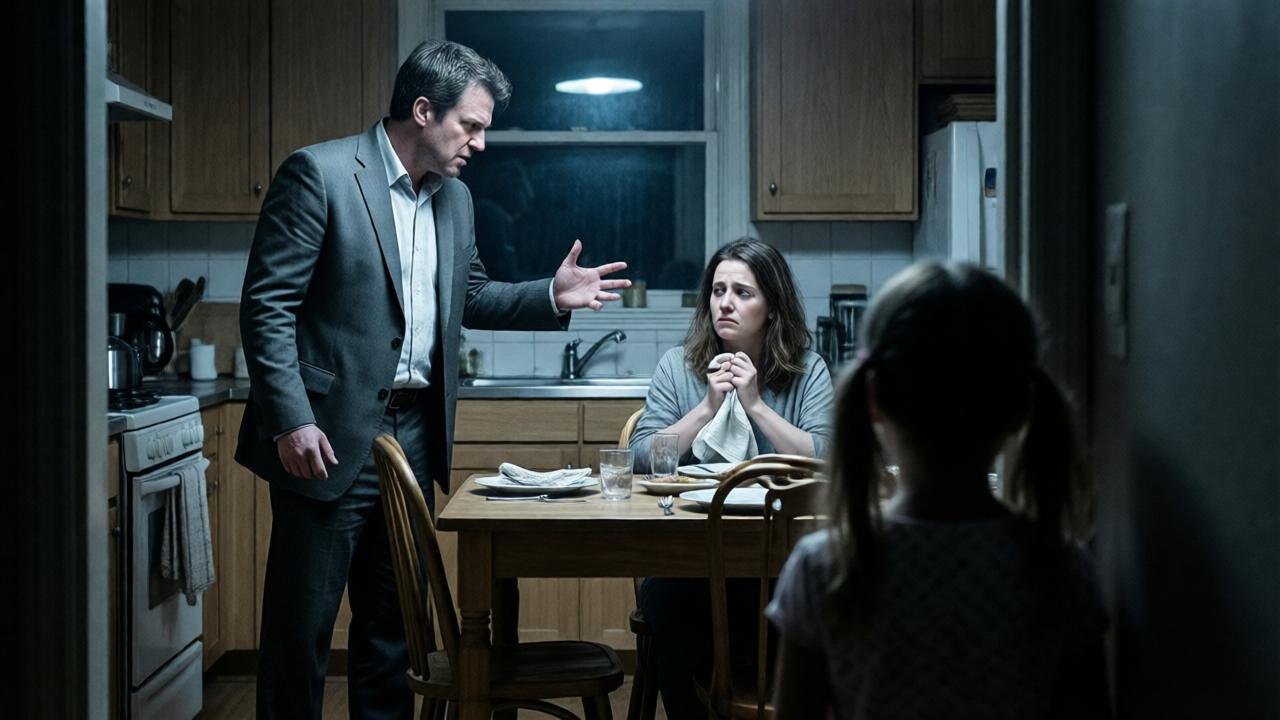
The next morning, a cruel irony played out. Hearing the door, the little girl rushed forward, her joy at her dad’s return a brief, brilliant flame. “Daddy!” she exclaimed, arms outstretched. In that same instant, a scream of rage, a loud bang that shattered more than just the moment. The shot meant for the unfaithful husband found its mark in the innocent shield he instinctively held—their daughter. The world narrowed to the frantic race to the hospital, the smell of antiseptic, and the beeping of machines that sounded like a countdown.
In the sterile quiet of the hospital room, the little girl’s fading voice wove a final, heartbreaking tapestry of love. “I love you, mom,” she breathed. “Dad, are you crying?” “No, honey,” he choked out, tears betraying his words as they streamed down his face. With a wisdom far beyond her years, she tried to mend what the adults had broken. “Dad, promise me you’ll always love mom,” she said, her gaze holding his. Then, a shiver. “Mom, I’m feeling cold. Please hold my hand.” Her mother, shattered, could only sob, gripping the small, cooling hand. “Don’t cry, mom. I’ll be fine.” And with those words of comfort offered from the edge of an abyss, she was gone.
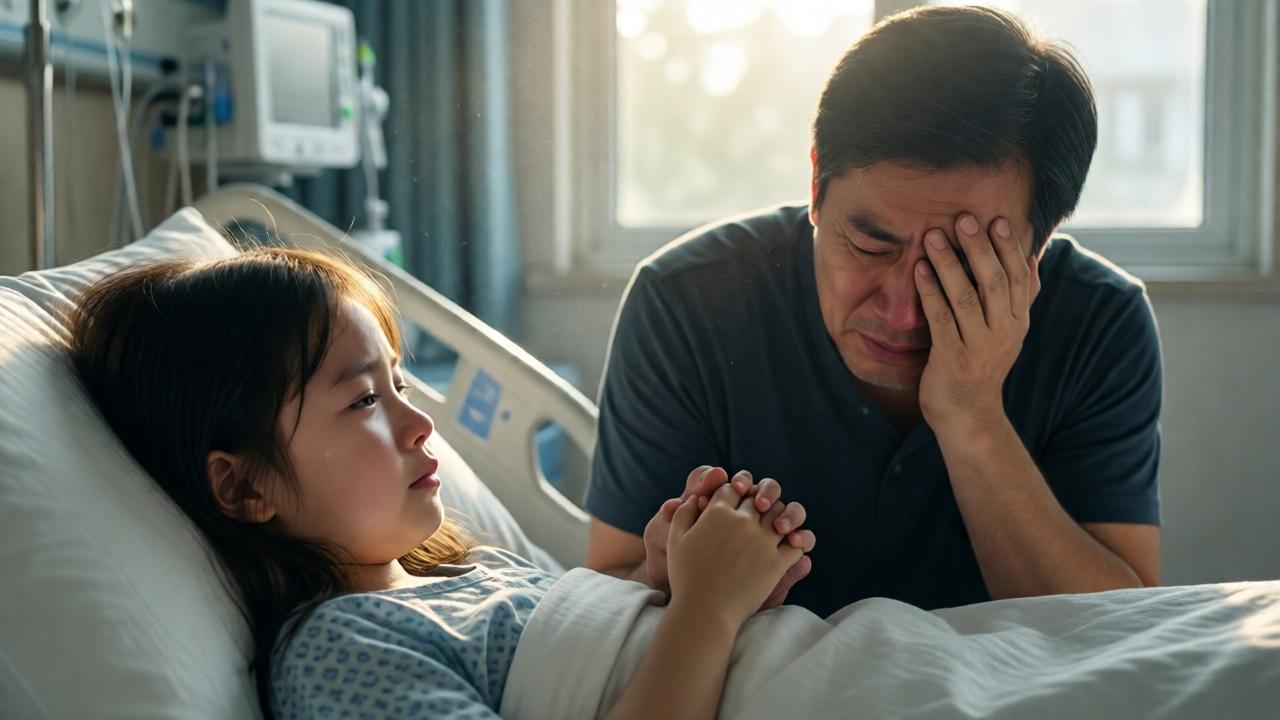
The silence that followed was absolute, a vacuum where laughter once lived. The question hangs in that silence, heavier than any accusation they had ever hurled at each other: *What do you miss the most when parents fight?* You miss the safety. You miss the certainty that home is a soft place to fall. You miss birthday candles being the only thing that gets blown out. You miss the simple, unspoken assurance that your world is held together by love, not resentment.
In the wreckage of their lives, the answer became their haunting legacy. They missed *her*—her laughter, her questions, her presence that had been the only glue left. Every argument they’d had was now a ghost, echoing in the empty rooms, a painful reminder that the true cost of their war was not borne by them, but by the tiny peacekeeper they had failed to protect. The battles were over, ended by a single, catastrophic shot, leaving only a vast and unending ceasefire of grief.
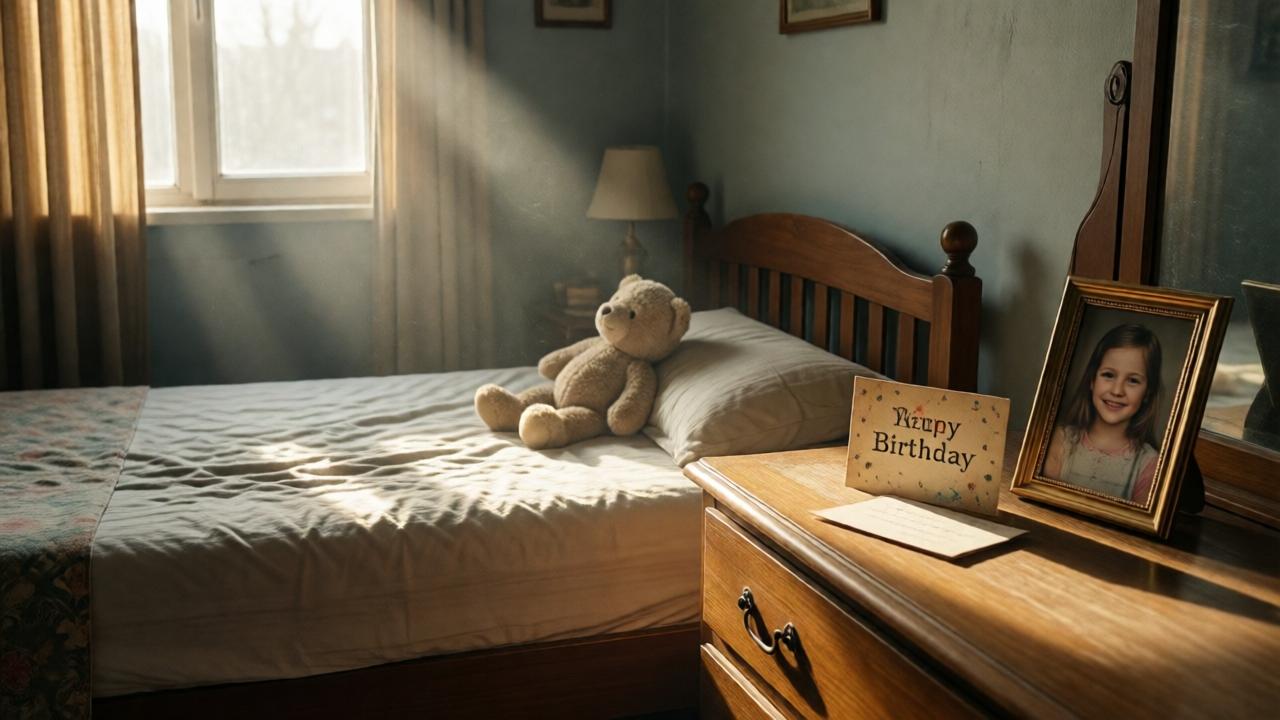
And so, the story asks us to look into our own homes, at the raised voices and the cold silences. It begs us to answer the question before it’s too late. What is being missed right now? A child’s trust? Their sense of security? The pure, unfiltered joy of a family at peace? The little girl’s final promise—”I’ll be fine”—was the only lie she ever told them. In the echoing silence she left behind, the truth is clear: when parents fight, what you miss most is the future itself.