

The applause that erupted in the grand hall was not the polite, expected kind. It was a thunderous, emotional wave that washed over Amanda and Gabriel, sealing them in a bubble of shared humanity. As the final note of the waltz faded, Amanda squeezed Gabriel’s hand, her eyes glistening with tears she no longer felt the need to hide. ‘Thank you,’ she whispered, her voice barely audible over the clapping. ‘You have no idea what you’ve just done.’ Gabriel, still holding her hand, simply nodded, his own composure shaken by the raw emotion in the room. ‘The pleasure was mine, Amanda,’ he replied, his genuine smile cutting through the formality of the evening.
From the back of the hall, Esteban Morales watched, his stern facade crumbling. The man who commanded boardrooms with a glance found himself utterly disarmed. He had spent a decade building walls of protection and luxury around his daughter, believing it was the only way to keep her safe from a world he saw as cruel. In that single dance, a young man with a simple suit and a courageous heart had shown him that the greatest cruelty was not the world’s indifference, but the isolation born from his own fear. As guests began to approach Amanda, finally seeing her, not her chair, Esteban turned and walked silently towards his office, his mind racing.

The days that followed were a whirlwind. Newspapers, which usually covered Esteban’s business deals, now ran front-page stories about ‘The Dance of Dignity.’ For Amanda, the invisible glass cage had shattered. Classmates who had never spoken to her now sought her out, their curiosity tinged with genuine remorse. But her focus was elsewhere. She asked her father for Gabriel’s contact information. ‘I want to thank him properly,’ she stated, a new firmness in her voice that Esteban had not heard since before the accident. Reluctantly, he provided it, a strange mix of dread and hope stirring within him.
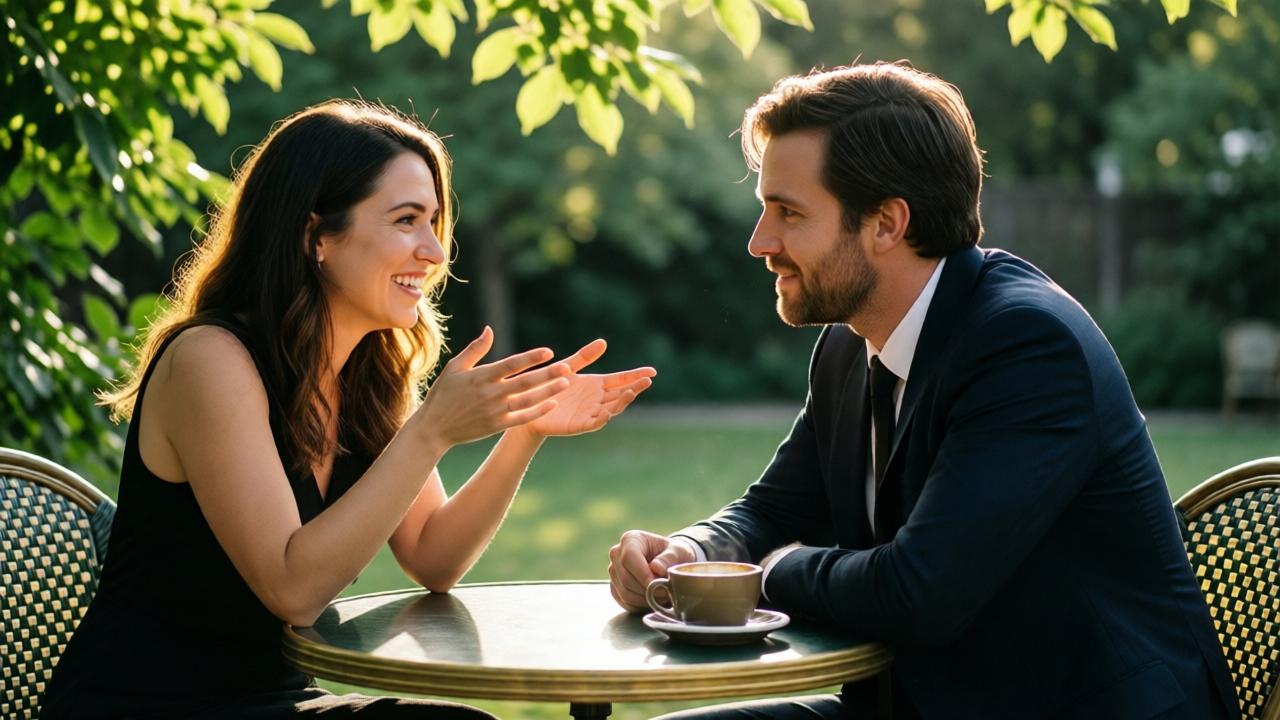
Their first meeting outside the ball was at a small, sun-drenched park café. ‘I was afraid you’d think the article was my doing,’ Gabriel admitted, stirring his coffee. Amanda laughed, a light, free sound. ‘My father’s publicists would have orchestrated a photo op with a prince, not a scholarship student,’ she said. ‘That’s what made it real.’ They talked for hours—about his dreams of becoming an engineer to build accessible infrastructure, about her love for art history, about the strange worlds they each inhabited. ‘You know,’ Gabriel said thoughtfully, ‘my mom cleans houses in your neighborhood. She always said the biggest houses often feel the emptiest.’ Amanda nodded, understanding dawning. ‘They are.’
Meanwhile, Esteban was undergoing his own transformation. He summoned Gabriel to his office, not with the intention of writing a check, but to listen. ‘What you did…’ Esteban began, uncharacteristically struggling for words. ‘It showed me a failure no audit could ever reveal.’ To everyone’s shock, Esteban Morales announced the creation of the ‘Morales-Gabriel Foundation,’ focused on accessibility and scholarships. He named Gabriel as a lead consultant, valuing his perspective not as charity, but as essential insight. ‘The world you will help build,’ Esteban told him, ‘is one where my daughter, and others like her, won’t need a miracle to be seen.’
The story does not end with a fairy-tale wedding, but with something more profound: a new beginning for all. Amanda, inspired, began studying adaptive design. Gabriel, with the foundation’s support, pursued his engineering degree with a clear mission. Their friendship, born from a moment of pure empathy, became a powerful partnership. They learned that the dance floor was just the first step. The real work was in building a world where everyone has the space to move, to be seen, and to belong—not out of pity, but out of shared humanity. As Amanda often says, ‘He didn’t just ask me to dance. He asked me to rejoin the world.’ And in doing so, he changed its rhythm forever.