
Bob’s laughter died in the air as Clara, without a word, picked up the first page of the contract. Her fingers, accustomed to a mop and rag, slid confidently over the Chinese characters. ‘Article 4.1,’ she began softly but clearly, ‘The definition of force majeure includes epidemics but excludes supplier strikes.’ A tomb-like silence fell over the room. Ten lawyers froze, staring at the girl in a janitor’s uniform who was translating the most complex legal clauses without a single pause.
Bob slowly sank into his chair, his face transforming from a mask of arrogance into one of utter astonishment. ‘Wait,’ he interrupted, jabbing a finger at the document. ‘What about this? This clause about jurisdiction?’ Clara nodded. ‘It states that any disputes will be resolved in Hong Kong under British law, but with a mutual consent provision. That’s standard wording for their region.’ One of the junior lawyers, the one who had whispered about her English, couldn’t hold back: ‘How do you know all this?’ Clara looked up from the text for a second. ‘My parents are linguists. I grew up in Beijing and Shanghai. And I studied legal Chinese at Columbia University,’ she said simply, as if discussing the weather, and dove back into reading.

Work began in earnest. Clara translated orally, sentence by sentence, occasionally asking Bob for clarification on specific American legal terms. ‘What’s the best way to convey “equitable relief” — “fair judicial protection” or “injunction in equity”?’ Bob, having completely forgotten his skepticism, actively joined the process. In an hour and a half, they covered more than half the document. Bob’s partner whispered over the phone: ‘Bob, I don’t know who this girl is, but she just found three potentially fatal clauses for us that our previous translator missed.’
At a quarter to three, Clara set aside the last page. ‘That’s it. The main risks: Clause 7.3 on confidentiality is too broad and could be interpreted against you. In Appendix B, the payment schedule numbers don’t match the text in the main section. And most importantly — the preamble lacks a clear definition of “Successful Project Completion,” which gives them room to maneuver.’ Bob looked at her as if seeing her for the first time. ‘Why are you here… cleaning?’ he finally asked. Clara sighed. ‘I have a degree, but no work visa. My parents stayed in China. This was the only job that didn’t ask for papers. And I needed to study and practice the language.’
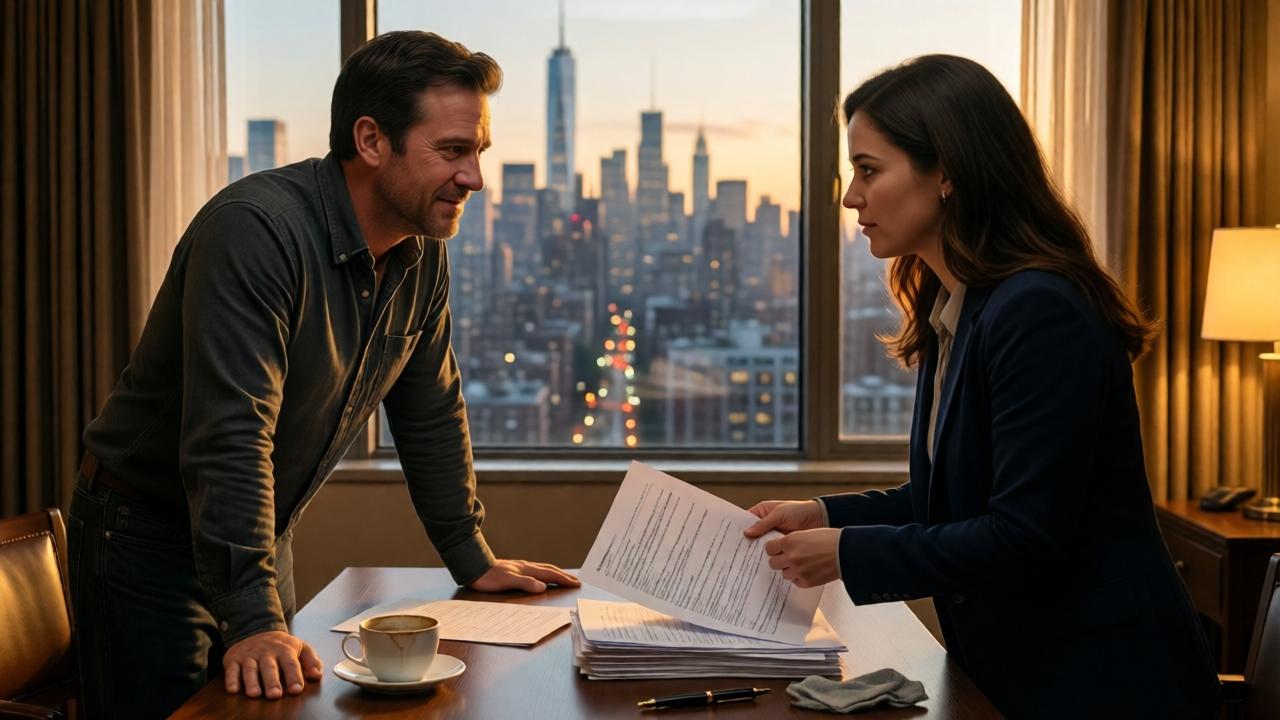
At three o’clock, the conference room door opened. The Chinese investors entered. Bob, gathering his courage, began the presentation. When it came to contract details, he gestured for Clara to join the table. ‘Gentlemen, allow me to introduce our colleague, Clara. She will walk you through the key points.’ The investors, seeing her clothes, exchanged glances. But Clara began speaking in fluent Beijing dialect with perfect professional pronunciation. Their bewilderment turned to interest, then approval. They started asking questions directly to her, and she answered just as directly but respectfully, sometimes joking to lighten the mood.
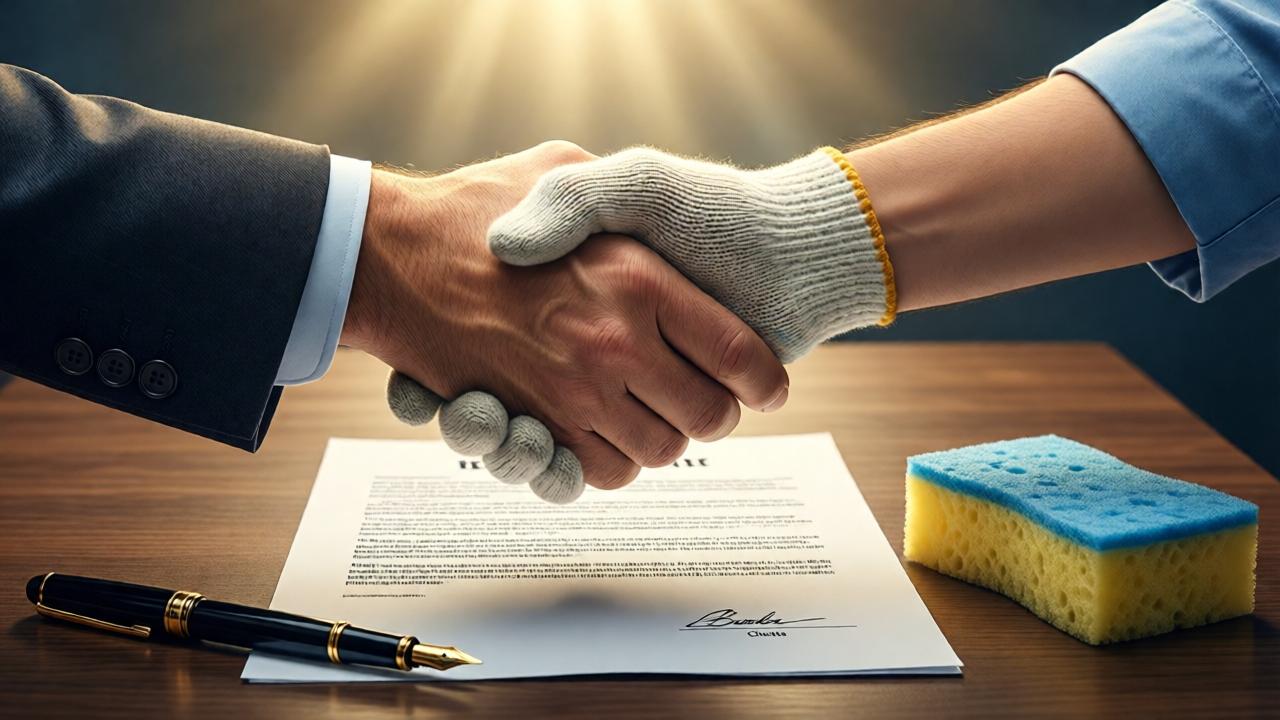
The deal was signed that same day. After the investors left, Bob returned to the empty hall where Clara was already cleaning the table. ‘Clara,’ he began, stumbling. ‘What I said… it was unforgivable.’ She straightened up. ‘Forget it, Mr. Bob. Work is work.’ ‘No,’ he said firmly. ‘Tomorrow at nine a.m., come to my office. Not with a bucket. With a resume. We have an opening for a full-time translator and junior legal consultant for international deals. And we’ll help sort out the visa issue.’ He extended his hand. Clara thought for a second, then wiped her palm on her clean apron and shook it. ‘At nine. Agreed,’ she said, and a smile flickered in her eyes for the first time all day.